I find problems in data, solve them through experimentation, and connect growth opportunities across the user lifecycle to business impact.
6+
YEARS
MARKETPLACE · B2B · COMMERCE
DOMAIN
GROWTH · FULL-FUNNEL · VALUE CREATION
SPECIALTY

Currently based in Seoul
Work
Projects
Promotion
프로모션 기획·환경 구축·운영
Background
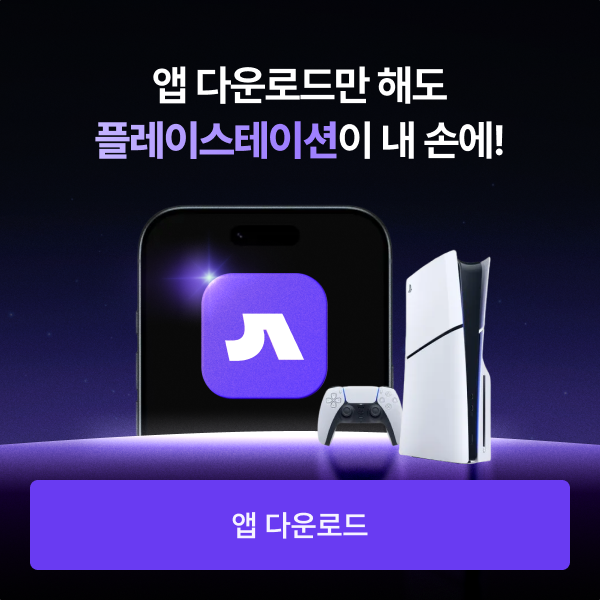
전환율은 미다운로드 그룹이 더 높아 앱 없이도 웹에서 요청서를 잘 작성합니다. 하지만 인당 요청서 수는 다운로드 그룹이 확연히 높아 앱 유저가 반복 사용을 더 많이 합니다. 즉 "신규 전환"보다 "리텐션/반복 사용"에 가치를 두고 앱 다운로드를 유도하는 프로모션이었습니다.
Execution
대상: 앱 미설치/삭제 고객
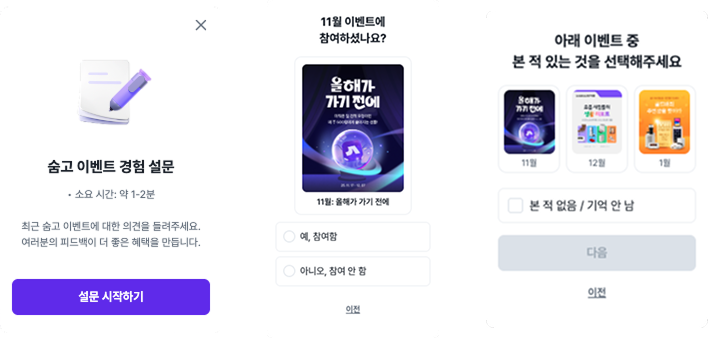
체스 테마 게임형 IAM — 약관 동의·푸시 권한 획득 플로우 설계
Airbridge Deferred Deep Link로 앱 설치 후 프로모션 자동 연결
Result
TBU — 진행 중
Creative & IAM
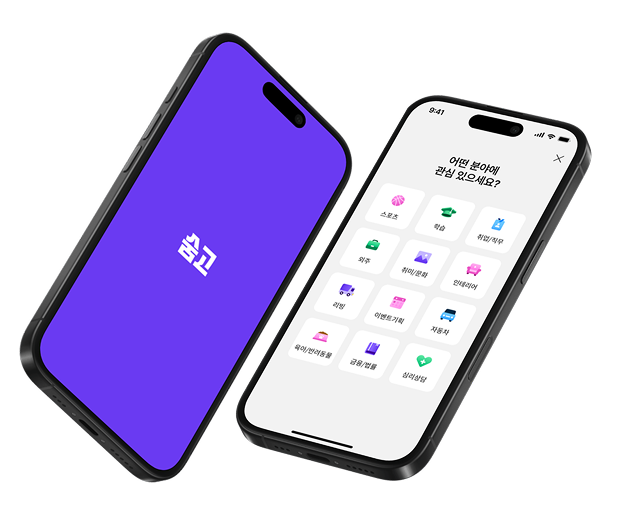
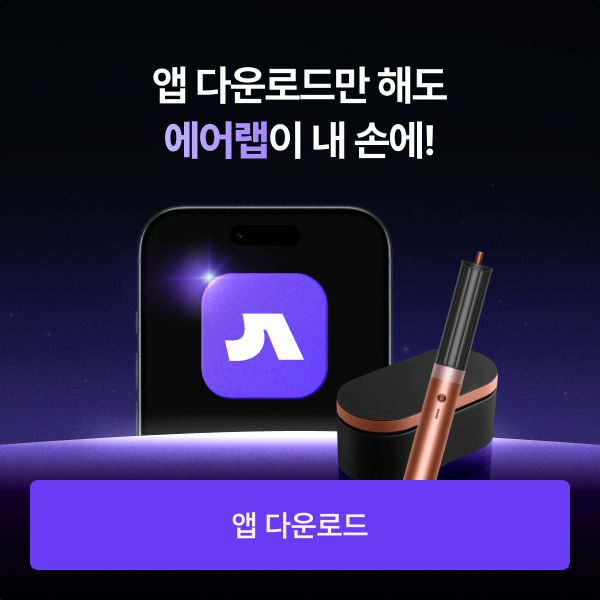
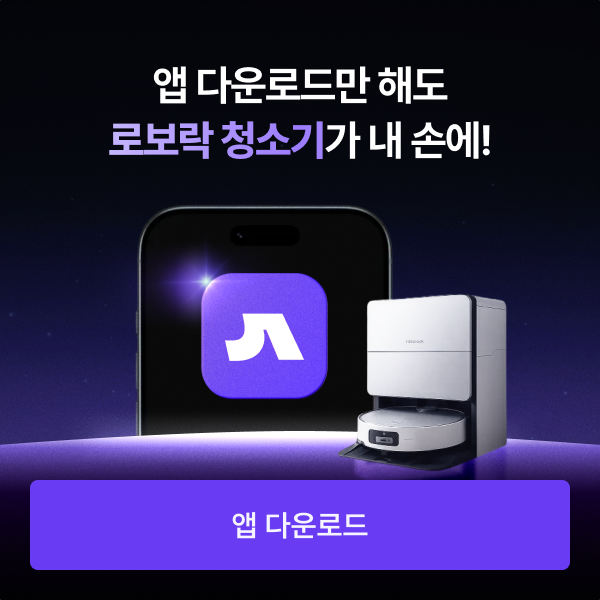
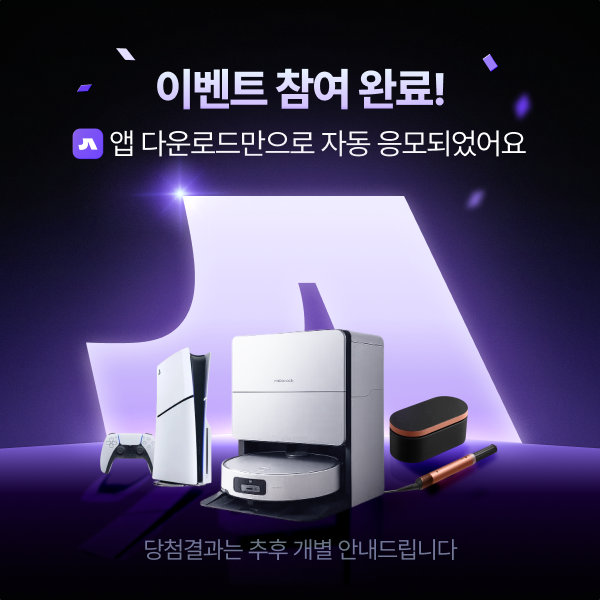
Braze IAM — 인터랙티브 데모
brazeBridge Mock이 주입된 실제 IAM 코드입니다. 약관 동의 → 체스 드래그앤드롭 → 경품 당첨 플로우를 직접 체험할 수 있습니다.
I find problems in data, solve them through experimentation, and connect growth opportunities across the user lifecycle to business impact.
6+
YEARS
MARKETPLACE · B2B · COMMERCE
DOMAIN
GROWTH · FULL-FUNNEL · VALUE CREATION
SPECIALTY
Currently based in Seoul
Work
Projects
Promotion
Promotion Planning, Setup & Operations
Background
The non-download group had a higher conversion rate — they submit requests fine via the web without the app. However, the download group showed significantly more requests per user, meaning app users have much higher repeat usage. This promotion prioritized "retention/repeat usage" over "new conversion" as the reason to drive app downloads.
Execution
Target: customers who have not installed or deleted the app
Chess-themed gamified IAM — designed terms agreement and push permission flow
Airbridge Deferred Deep Link to automatically connect promotion after app install
Result
TBU — In progress
Creative & IAM
Braze IAM — Interactive Demo
This is the actual IAM code with brazeBridge Mock injected. You can experience the terms agreement → chess drag-and-drop → prize win flow directly.
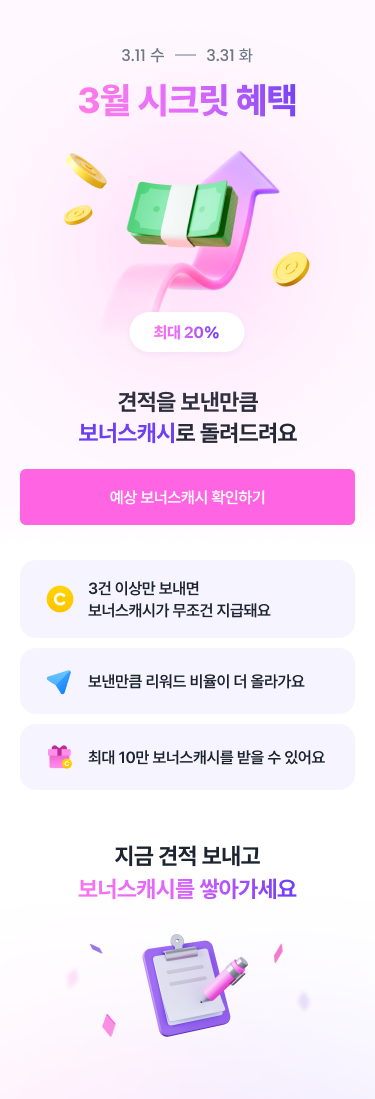
Designed a cashback structure to amplify quote-sending behavior in anticipation of a period when the quote-to-request ratio would decline. The key challenge was controlling deadweight from highly-active providers while concentrating incentives on the marginal behavior-change segment.
Execution
Extracted provider counts by category and tier via BigQuery (moving/cleaning, tutoring, freelance, wallpapering)
Designed an iROAS simulator based on tier migration rate assumptions and response functions
Cashback structure: 3+ quote tiers with graduated rates (3–20%), 30-quote cap, excluding 10+ tier to control deadweight
Reported conservative/optimistic scenarios via an interactive HTML budget dashboard
Result
TBU — In progress
Creative & IAM
Braze IAM — Interactive Demo
2 IAMs: bonus cash calculator + quote-send trigger. Experience the tier-jump display logic and Liquid integration directly.
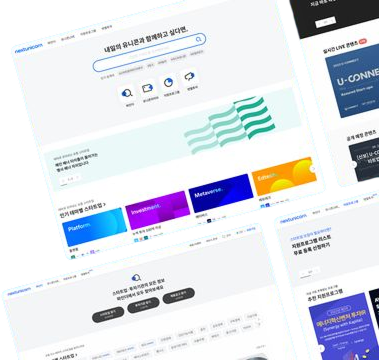
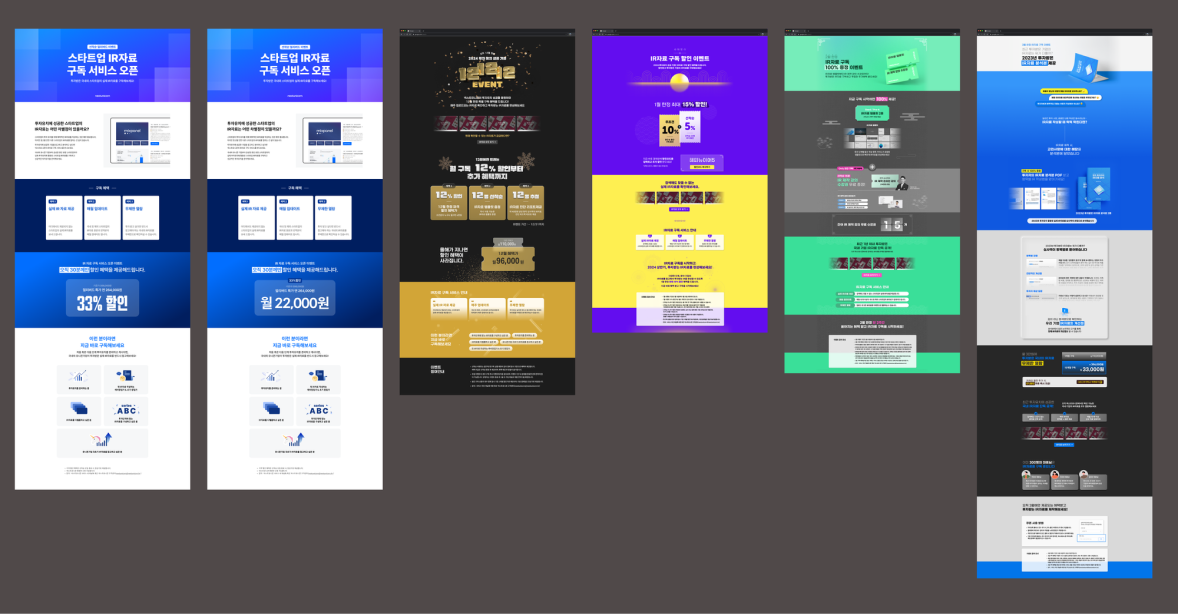
Nextunicorn, planned and operated monthly promotions targeting IR report subscription conversions. Personally designed the discount structure, event theme, and landing page configuration each month, driving an average of 60% of monthly revenue.
Creative
Growth Infra
Marketing Automation & Data Infrastructure
① CRM Performance Dashboard Automation
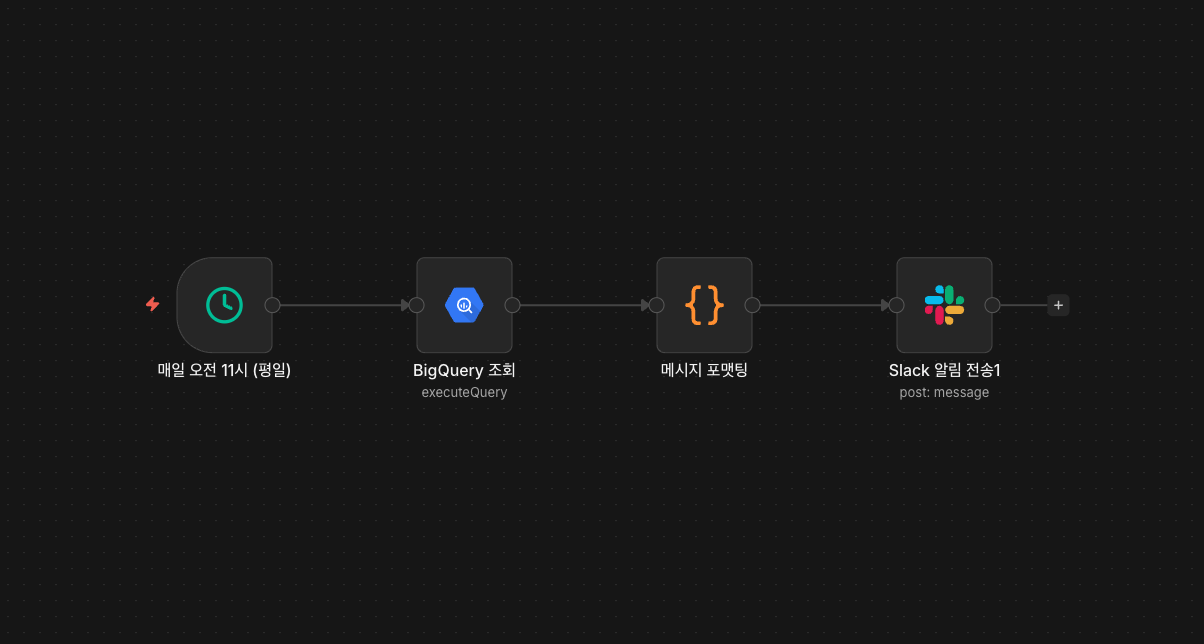
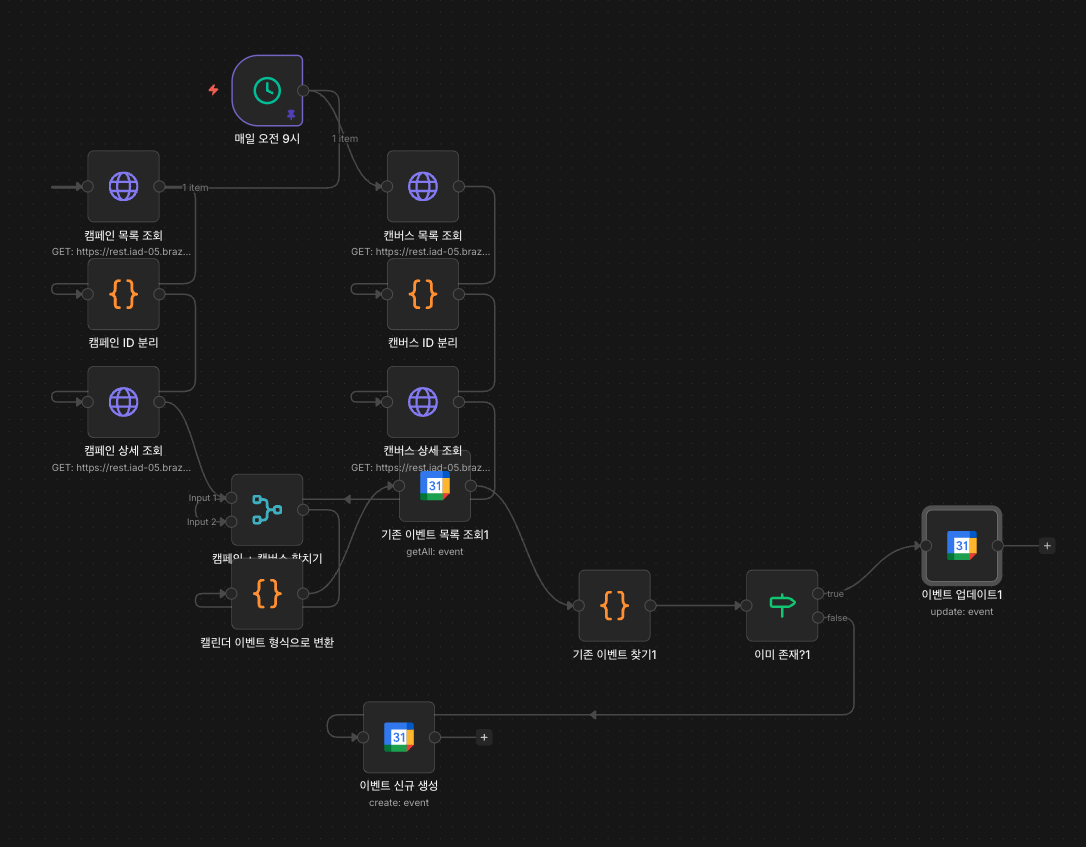
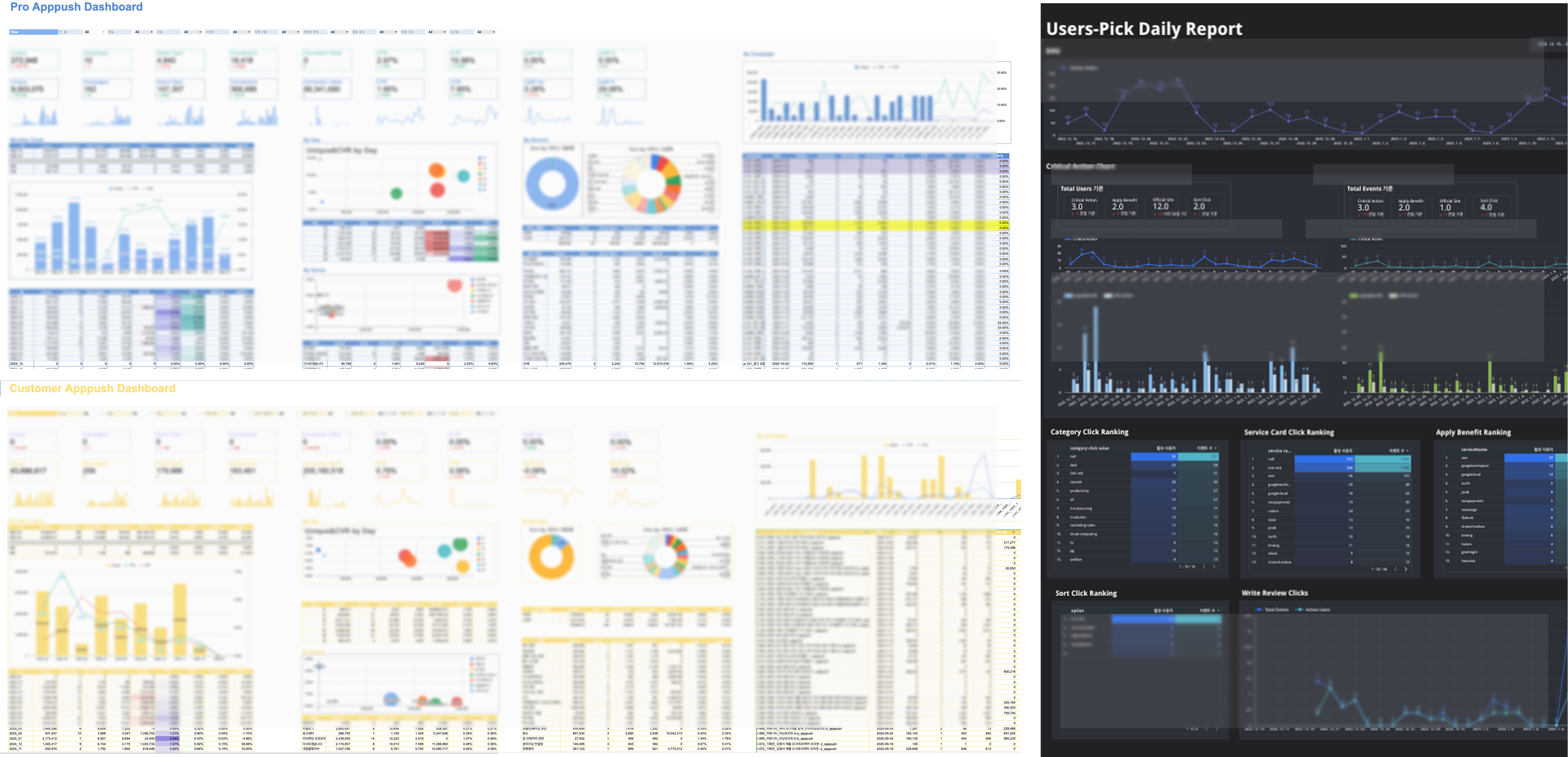
Built a dashboard that automatically aggregates app push campaign performance by integrating BigQuery + Google Apps Script + Looker Studio. Tracks Unique, CTR, CVR, and Uplift by provider/customer channel on a daily and monthly basis — enabling real-time monitoring without manual aggregation.
② Program Operations Automation
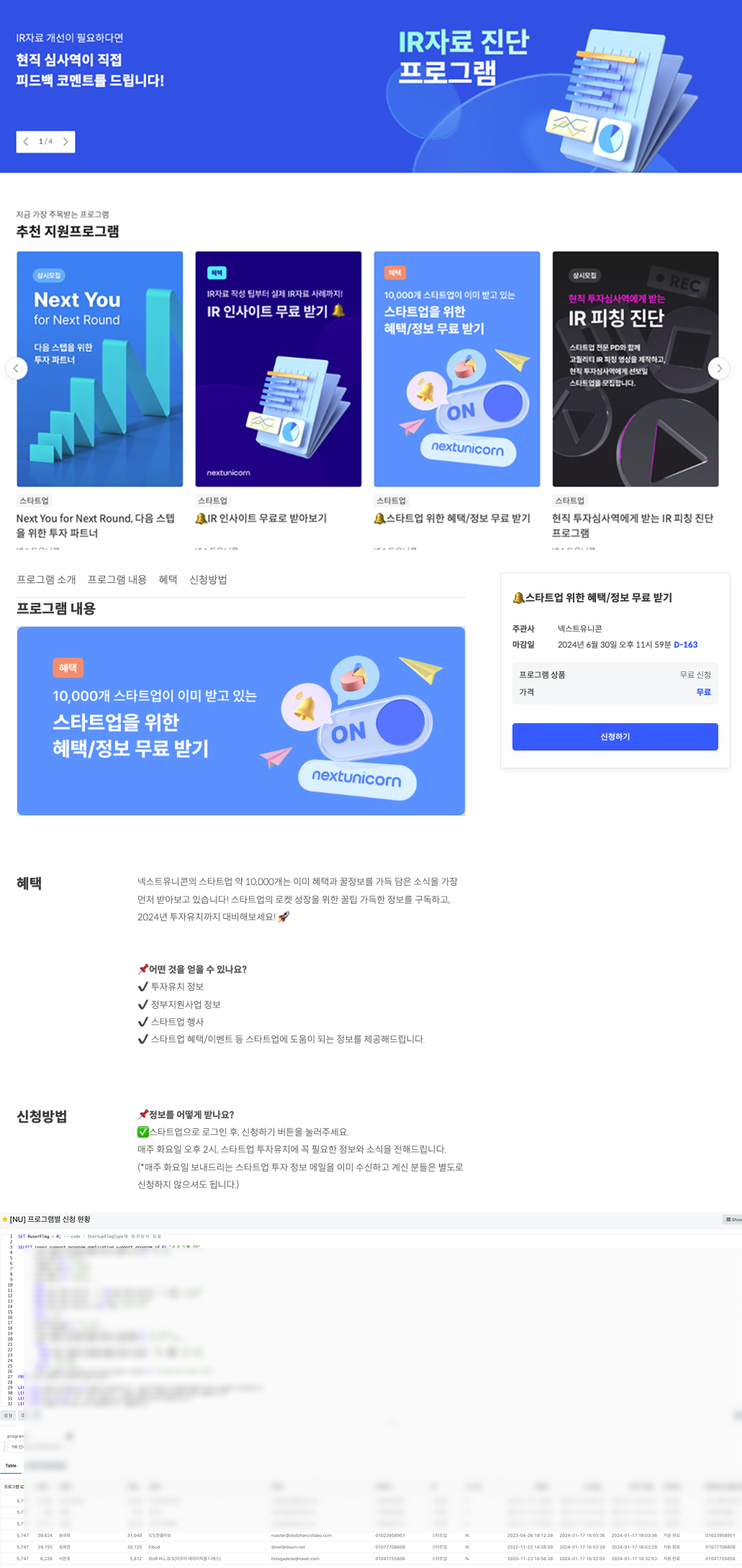
Built a pipeline connecting program sign-up → auto DB entry → marketing consent update → automatic email dispatch. Used BigQuery SQL to extract applicant status in real time and Google Apps Script to automate follow-up actions, minimizing manual operational effort.
③ Promotion Monitoring Automation & Simulator
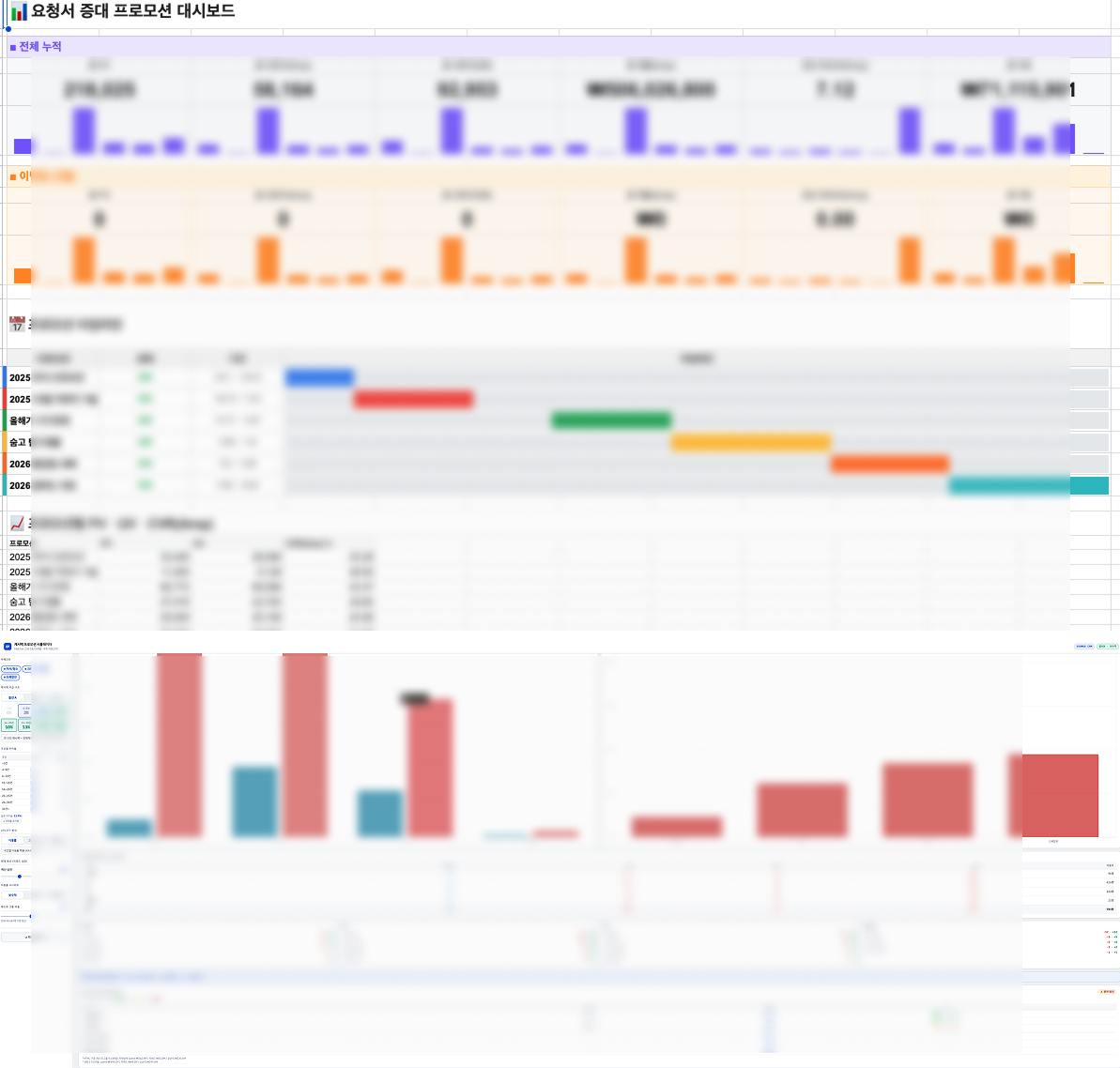
Built a dashboard that auto-aggregates cumulative promotion performance and a Gantt chart-based timeline. Also directly implemented an interactive HTML simulator that calculates tier migration rates and iROAS in real time — enabling the marketing team to make promotion decisions on a consistent basis.
④ Braze Liquid In-App Survey Implementation
Implemented an in-app survey with branching questions based on user participation history using Braze Custom HTML IAM + Liquid syntax. Response data is immediately stored to Custom Attributes via brazeBridge and reflected in CRM segments.
⑤ Data Pipeline → Braze Integration Planning
Planned a pipeline to send BigQuery · Kafka · client event data to Braze User Attributes. Designed a structure that reflects providers' Smart Quote campaign activation/deactivation status in real time to Braze, enabling customized CRM segment operations — executed in collaboration with engineering and product teams.
Leads were fragmented across teams with insufficient management.
There were no dedicated campaigns for lead generation.
Hypothesis
Classifying and managing collected leads by user role, and pushing differentiated USPs per role, would increase lead conversion rates.
Execution
① Lead Generation & Conversion Process Establishment
Led cross-functional lead generation collaboration and streamlined processes — established user role-based segmentation criteria and a conversion tracking framework.
② Paid & Non-Paid Campaign Execution
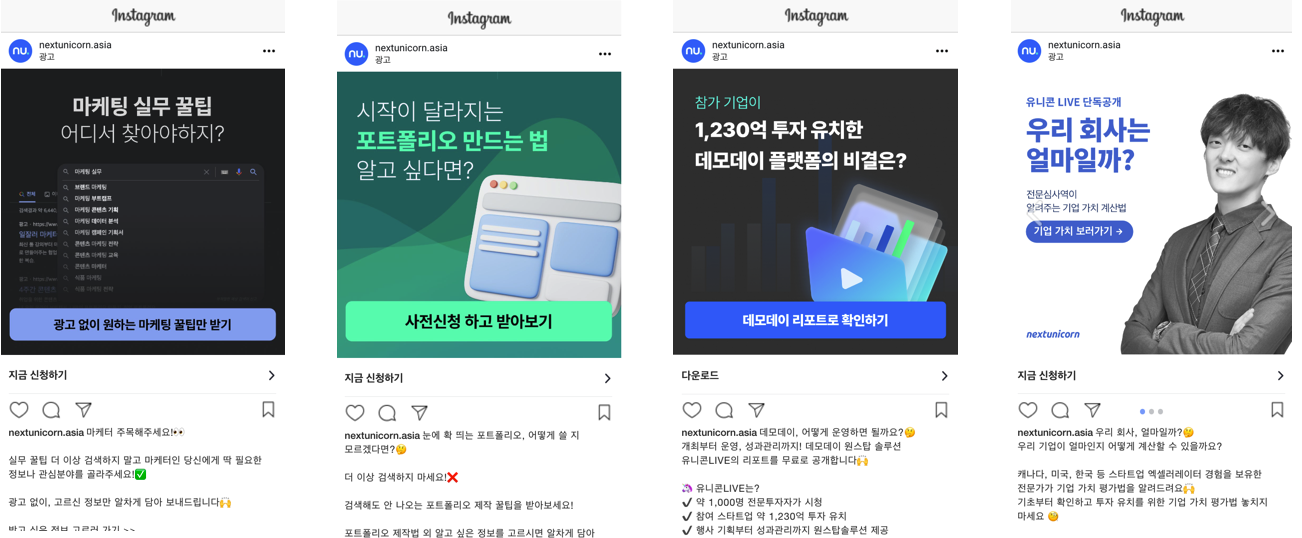
Paid campaign execution and performance improvement — creative and message optimization by target segment
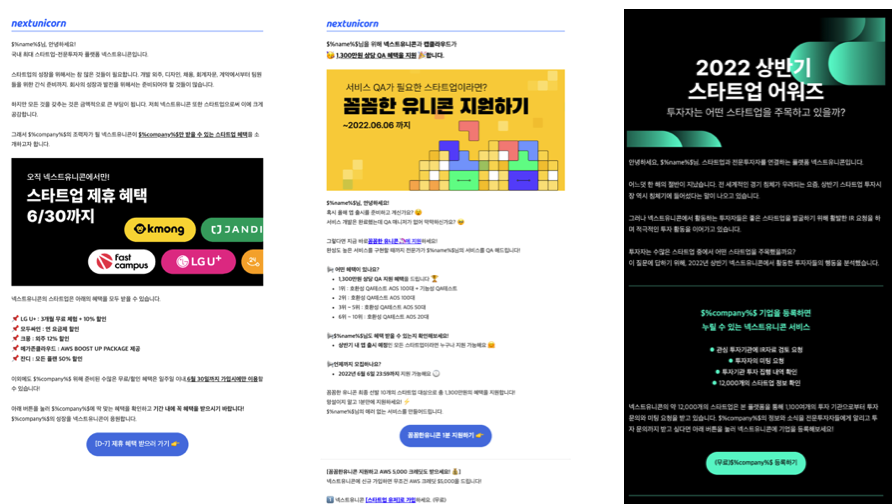
Non-Paid campaign execution and performance improvement — lead acquisition via organic channels
Paid — Instagram Ads
Non-Paid — Email & Newsletter
③ Lead Segment Separation & Management Efficiency
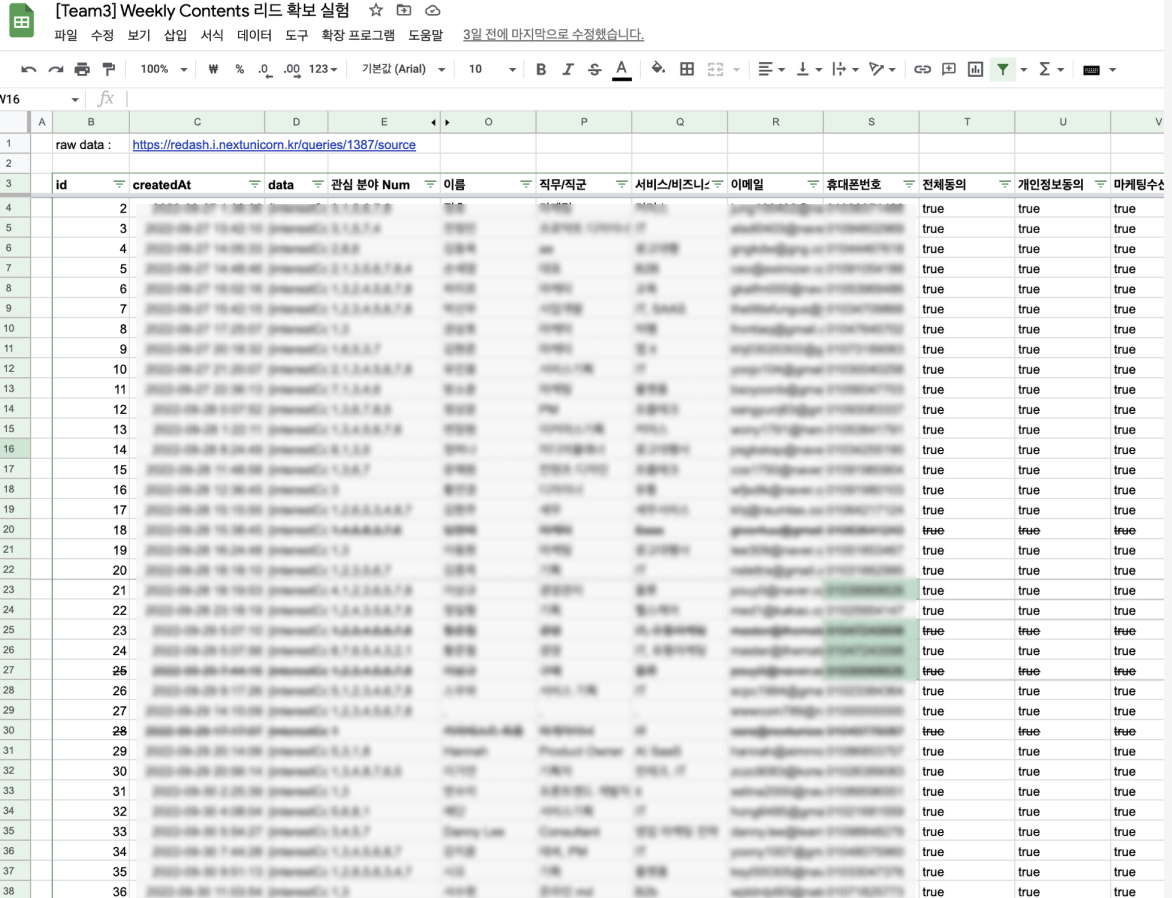
Organized lead management processes and created automated performance tracking sheets. Implemented automation using BigQuery & Python for real-time monitoring of lead acquisition status.
Key Metrics
Leads acquired
Lead conversion rate
Growth is a structure, not a moment. Let’s build better ones.
If you'd like to talk more about my portfolio or projects — or have a growth problem worth solving together — feel free to reach out.
숨고(Soomgo)는 온디맨드 서비스 마켓플레이스로, 수백만 명의 고객과 수리, PT 등 300개 이상의 카테고리에 걸친 전문 고수를 연결하는 플랫폼입니다.
고객과 고수가 상호작용하는 양면 시장형 특징을 가지고 있으며, 매출은 두 가지 핵심 액션—고객의 서비스 요청 제출과 고수의 견적 발송—을 통해 발생합니다.
고수가 고객 요청에 견적을 보낼 때 발생하는 ‘견적 발송료’가 플랫폼의 주요 수익 모델입니다.
Customer
RequestQuote
Provider
a single growth system — structuring each stage so providers experience value early, repeat it, and engage more deeply over time.">Rather than running campaigns in isolation, I redesigned the provider journey as a single growth system — structuring each stage so providers experience value early, repeat it, and engage more deeply over time.
결제 전환율
+43.3%
견적 전환율
+32%
Promotion ROAS
1,249%
CONTEXT
플랫폼의 전체 견적 전환율(QR)은 아래와 같이 계산됩니다.
QR = 요청서 오픈율(OR) × 견적서 발송 전환률(CR)
→ 요청서 오픈율(OR): 매칭된 요청서 중 고수가 열람한 비율
→ 견적서 발송 전환률(CR): 열람된 요청서 중 실제 견적이 발송된 비율
HIGH-LEVEL INITIATIVE
1. 고수에게 더 많은 고용 기회를 제공한다.
2. 고수의 성장을 더 빠르게 만든다.
MY ROLE
고수의 활성화 비율 및 수익 전환율을 증대한다
I own the end-to-end CRM strategy for Soomgo's service providers.
From onboarding to retention, I define and improve problems across every lifecycle stage, track funnel conversion and drop-off through data, and extract behavior-based segments and cohorts directly in SQL. I define and combine the roles of each channel — App Push, KakaoTalk notification, email, and in-app messaging — to maximize conversion and revenue while minimizing provider CRM fatigue.
I collaborate cross-functionally with POs, data scientists, data analysts, and UX researchers.
신규 고수 안착과 요청 반응 전환 개선
01
PROBLEM
겉으로는 성장, 엔진의 효율은 하락
QR
요청서 수신
OR
요청서 오픈
CR
견적서 발송
YoY
전체 견적서 발송률 ▼ -6.76%
요청서 오픈율 ▼ -1.70%
견적서 발송 전환율 ▼ -5.17%
전환 단계별 YoY 비교 (2023 vs 2024)
2023년2024년
성장 엔진의 효율은 두 구간에서 동시에 약해지고 있었습니다. 신규 고수는 가입 초기 첫 결제로 안착하지 못했고, 요청을 받은 고수 전반에서는 확인 이후 실제 견적 발송까지 이어지는 반응률이 점차 약화되고 있었습니다.
하락은 전 단계에 걸쳐 고르게 발생한 것이 아니었습니다. 요청서를 확인하는 비율(-1.70%)보다 견적을 실제로 발송하는 전환율(-5.17%)의 낙차가 훨씬 컸습니다.
즉, 문제는 유입 감소가 아니라 마지막 행동으로 이어지는 엔진의 효율 저하였습니다. 이후 분석과 실행의 방향을 발송 직전 단계의 장벽 제거로 좁혔습니다.
02
DIAGNOSIS
가장 먼저 꺾인 곳은 성장 엔진의 시작점이었습니다
Breaking down funnel data by cohort, a significant portion of the decline originated from new provider churn. Only 15% of new providers completed their first payment within 7 days of sign-up, and the 1-month payment rate dropped 6.3pp year-over-year. Providers who failed to convert to a first payment during this period almost always churned.
즉, 전체 효율 하락은 발송 직전 문제만이 아니라, 신규 고수의 초기 안착 실패가 엔진의 시작점부터 누적된 결과이기도 했습니다.
가입 후 7일 이내 첫 결제 전환율
가입 이후 단계가 연속적으로 이탈되며, 특히 첫 결제 이후 첫 견적으로 이어지는 구간의 낙차가 크게 나타났습니다.
가입 후 첫 1개월 이내 첫 결제율 변화 추이
초기 결제 전환이 하락 추세를 보이며, 신규 고수의 첫 액션 안착 실패가 전체 하락을 확대했습니다.
전환율은 더 낮아졌고, 발송까지의 시간은 더 길어졌습니다
요청서 확인 이후 견적 발송 전환율은 35.7%에서 32.7%로 하락했고, 견적 발송까지 걸리는 시간의 중앙값도 8시간 36분에서 10시간 28분으로 증가했습니다. 전환율이 낮아지는 동시에 발송 결정 속도까지 함께 느려지고 있었습니다. 같은 구간을 더 따라가 보니, 견적 발송까지 이어지는 퍼널 안에서 캐시 구매와 스토어 방문 전환율도 함께 하락하고 있었습니다. 특히 캐시 부족 안내 모달에서 이탈이 가장 크게 나타났습니다. 전환율과 발송 속도가 동시에 느려지고 있다는 것, 그리고 이탈이 특정 지점에 집중된다는 것은 발송 직전에 고수가 망설이게 만드는 장벽이 존재한다는 신호였습니다.
Defined Problem
신규 고수의 초기 안착 실패와 발송 직전 장벽이 겹치며, 견적 발송까지 이어지는 성장 엔진의 효율이 구조적으로 약해지고 있었습니다.
03
STRATEGY
엔진을 다시 점화하기 위해 전환 구조를 다시 설계했습니다
문제는 하나의 지점이 아니라, 엔진의 시작점과 발송 직전 구간에서 동시에 발생하고 있었습니다. 따라서 해결도 단일 액션이 아니라, 첫 결제를 활성화의 기준점으로 다시 정의하고, 발송 직전의 마찰을 줄이면서 행동이 일어나는 시점에 맞춰 메시지를 전달하는 방식으로 설계했습니다.
Activation의 기준점을 다시 정의했습니다
데이터를 분석한 결과, 평균적으로 첫 견적 발송은 첫 결제 후 10분 이내에 이루어졌습니다. 이는 첫 결제가 단순한 결제 이벤트가 아니라, 고수가 실제 행동을 시작하는 전환 지점이라는 의미였습니다.
반대로 가입 후 7일 이내에 결제하지 않은 고수는 대부분 이후에도 이탈했고, 비결제 고수의 60% 이상은 가입 하루 만에 이탈했습니다. 따라서 신규 고수의 초기 안착을 높이기 위해 가장 중요한 골든타임은 가입 후 첫 24시간이라고 판단했습니다.
결국 초기 성장은 첫 결제 전환을 얼마나 빠르게 만들어내느냐의 문제였습니다.
04
EXECUTION
발송 직전의 마찰을 줄이고, 행동 시점에 맞춰 메시지를 설계했습니다
신규 고수가 첫 결제까지 빠르게 도달하도록 초기 마찰 구간을 재정의하고, 활성화 기준점을 앞당기는 구조로 설계했습니다.
Experiment Result+43.3%가입 당일 구매 전환율
결제 이력이 없는 신규 고수에게 스토어 진입과 첫 구매는 견적 발송 이전에 반드시 거쳐야 하는 선행 단계였습니다. 앞서 정의한 것처럼 첫 결제는 단순한 구매가 아니라, 실제 행동이 시작되는 활성화의 기준점이었습니다.
하지만 기존 구조는 고수가 견적서를 작성한 뒤에야 캐시 부족을 인지하게 만드는 방식이었습니다. 이미 시간과 노력을 들인 뒤 추가 결제를 요구받는 흐름은 발송 직전의 마찰을 키웠고, 실제로 이 구간에서 높은 이탈이 발생하고 있었습니다.
그래서 캐시 부족 안내의 노출 시점을 견적서 작성 전으로 옮기면 스토어 유입이 앞당겨지고, 첫 구매 전환율도 함께 개선될 것이라는 가설을 세웠습니다. 실험 결과, 새롭게 설계한 모달은 기존 시스템 모달 대비 가입 1일 이내 구매 전환율을 43.3% 유의미하게 개선했습니다.
AS-IS
견적서 작성 후에야 캐시 부족을 알리며, 이미 리소스를 들인 뒤 이탈이 발생할 수 있었습니다.
TO-BE
작성 전에 캐시 부족 상태를 먼저 안내해, 스토어 진입과 캐시 충전으로 자연스럽게 연결되도록 바꿨습니다.
Figure — 캐시 부족 모달 개선: AS-IS(작성 후 안내) vs TO-BE(작성 전 안내)
이후에는 첫 결제 이후 고수와 기존 고수의 요청 반응 구간에서, 상태별 리마인더 전송 시점을 최적화했습니다.
요청 반응 구간의 리마인더 시점과 메시지 맥락을 재설계해, OR과 CR을 함께 개선하는 전환 흐름으로 연결했습니다.
Experiment Result
OR+24.55%견적서 오픈 비율
CR+6.19%요청서 확인 후 견적 발송
QR+32%견적 전환율
요청을 수신한 고수 전반에서, 요청 확인 이후 실제 견적 발송까지 이어지는 전환율이 점차 낮아지고 있었습니다. 고수는 개별 요청 알림만 받고 있었고, 요청 수신 이후 얼마나 시간이 지났는지에 대한 정보는 제품 외부에서 거의 확인할 수 없었습니다. 많은 고수가 다른 업무를 병행하며 간헐적으로 요청서를 확인했기 때문에, 초기 알림을 놓친 경우 미열람 요청을 다시 확인하지 않고 넘어가는 경우도 많았습니다.
데이터상 대부분의 고수는 요청서를 열람한 뒤 1일 이내에 견적을 발송하고 있었습니다. 이는 같은 리마인더라도 누구에게, 언제 전달하느냐에 따라 효과가 크게 달라질 수 있다는 의미였습니다. 그래서 요청서 확인 상태를 기준으로 리마인더 타이밍을 분기하는 실험을 설계했습니다.
실험 결과, 열람 후 미발송 고수에게는 열람 후 24시간 시점이 가장 효과적이었고, 미열람 고수에게는 요청 마감 1일 전 시점이 가장 효과적이었습니다. 전자는 고수가 업무 외 특정 시간대에 몰아서 요청서를 확인하는 패턴과 맞닿아 있었고, 후자는 이후에는 응답 자체가 불가능해지는 시점이라는 점에서 손실 회피 심리를 자극하기에 적절했습니다. 결과적으로 견적서 오픈 비율 24.55%, 요청서 확인 후 견적 발송 전환율 6.19%, 전체 견적 전환율 32%를 개선했습니다.
Figure — 요청 확인 상태와 맥락에 따라 다르게 설계한 리마인더 앱푸시 예시
05
RESULT
신규 고수의 초기 안착과 요청 반응 전환 구간 모두에서 전환 효율을 회복했습니다
신규 고수의 초기 안착과 기존 고수를 포함한 반응 전환 구간을 동시에 개선하며, 성장 엔진의 시작점과 반복 구간 모두에서 전환 효율을 회복했습니다. 이후 첫 결제를 활성화의 기준점으로 다시 정의하고, 발송 직전의 마찰을 줄이고, 행동이 일어나는 시점에 맞춰 메시지를 전달하면서 엔진의 시작점과 마지막 구간을 함께 개선했습니다.
결과적으로 이 프로젝트는 단순한 알림 보강이 아니라, 고수가 첫 결제 이후 실제 행동으로 빠르게 이어지고 반복적으로 반응하도록 전환 구조를 다시 설계한 작업이었습니다.
행동 장벽 분석과 세그먼트 기반 전환 개선
01
PROBLEM
전환율은 보였지만, 고수가 왜 멈추는지는 보이지 않았습니다
데이터는 결과를 보여줬지만, 고수가 행동을 멈춘 이유는 보여주지 않았습니다.
퍼널 데이터만으로는 고수가 어느 지점에서, 어떤 이유로 행동을 멈추는지 설명할 수 없었습니다.
02
DIAGNOSIS
퍼널 밖에 있던 행동 장벽이 전환을 멈추게 하고 있었습니다
정량 데이터가 답을 주지 못한다면, 고수에게 직접 물어보는 것이 가장 빠르게 원인을 파악할 수 있는 방법이었습니다. 별도 프로덕트 개발 없이 Braze 인앱 메시지 커스텀 코드로 서베이 모달을 직접 구현해, 버튼 클릭 반응을 통해 zero-party 데이터를 직접 수집하여 고수가 실제로 겪는 페인포인트를 파악했습니다.
Figure — 실제 노출한 견적 미발송 사유 수집 및 가이드 모달
견적 발송 경험 유무별 CTA 반응 비교
Figure — 견적 발송 경험 유무별 CTA 반응 비교 (CTR 기준)
같은 미발송이라도, 신규에게는 시작의 부담이, 기존에게는 판단의 부담이 더 컸습니다.
견적 발송 경험 없음
• The quote-writing process itself feels complex
• Unclear which information to enter first
• Writing burden leads to deferring the first attempt
견적 발송 경험 있음
• Uncertainty about how to price a quote
• Stronger per-request ROI evaluation
• Tendency to respond selectively, even to similar requests
유저 인터뷰와 서베이를 통해 확인한 결과, 전환을 가로막고 있던 것은 기능 부족이 아니라 결과에 대한 불확실성과 행동 장벽이었습니다.
DEFINED PROBLEM
견적서는 작성됐지만 발송되지 않았습니다. 발송 직전, 고수에게 필요한 정보와 확신이 없었습니다.
신규 고수에게는 '일단 한 번 보내볼 수 있는 상태'를, 기존 고수에게는 요청 확인 직후 가격 판단과 발송 결정을 더 빠르게 할 수 있는 구조를 만드는 것이 목표였습니다. 해결 전략의 핵심은 단순 노출 확대가 아니라, 발송 직전의 장벽을 더 정밀하게 제거하는 데 있었습니다.
서베이 목적으로 노출한 모달이었지만, 예상치 못한 결과가 나타났습니다. CTA를 클릭해 가이드 콘텐츠로 이동한 고수는 모달을 닫은 고수 대비 1시간 이내 견적 발송 전환율이 약 9% 높게 나타났습니다. 정보의 부재가 아니라, 필요한 정보를 행동 직전에 연결해주는 전달 장치의 부재가 더 큰 문제라고 판단했습니다.
03
STRATEGY
고수가 멈추는 이유가 다르면, 전달 메시지도 달라야 했습니다
문제를 하나의 메시지로 해결하기보다, 장벽 유형에 따라 다른 접근이 필요하다고 보고 구조를 다시 설계했습니다.
04
EXECUTION
장벽 유형별로 다른 모달과 메시지를 설계했습니다
Experiment Result
QR+9.26%견적 발송 전환율
Response+17.8%견적서 오픈 후 1일 내 고객 응답률
AS-IS
기존 시스템 모달은 정보량은 있었지만, 행동으로 이어지는 가이드 역할은 충분하지 않았습니다.
TO-BE
개선 모달은 견적가 산정과 견적서 작성이라는 핵심 장벽을 더 직접적으로 안내하도록 바꿨습니다.
Figure — 견적 작성 가이드 모달 개선: AS-IS vs TO-BE
이 결과를 바탕으로 신규 고수의 첫 결제와 첫 견적 발송 이탈의 주요 원인인 '견적가 산정'과 '견적서 작성'의 어려움을 실제로 완화할 수 있는 장치가 있는지 추가로 점검했습니다. 그 결과, 기존에 견적 작성 전에 노출되던 AS-IS 시스템 모달은 필요한 정보와 행동 가이드를 충분히 전달하지 못하고 있었고, 이를 개선한 가이드 모달 캠페인으로 이어졌습니다. 개선 실험에서 견적 발송 전환율은 9.26% 유의미하게 개선됐습니다.
재결제 전환 비교
가입 후 7일 이내 재결제 전환율
가입 후 7일 이내 재결제 전환율
첫 결제 고수 중 재결제 전환율
첫 결제 고수 중 재결제 전환율
활성화 개선 이후에도 과제가 남아 있었습니다. 첫 결제를 유도해도 반복으로 이어지지 않았습니다. 가입 후 7일 이내 재결제 전환율은 7%, 첫 결제 고수 중 재결제 비율도 30%에 불과했습니다.
신규 고수의 재결제 이탈 사유 조사 응답
Figure — 신규 고수의 재결제 이탈 사유 조사 응답
발송된 견적 대비 응답률
오픈된 견적 대비 응답률
Figure — 견적 발송 이후 고객 응답률: 발송 기준 18.8%, 오픈 기준 26.8%
리서치에서 재결제 이탈의 주요 원인은 견적 발송 후 고객의 무응답이었습니다. 발송된 견적 대비 고객 응답률은 18.8%, 오픈된 견적 대비로도 26.8%에 그쳤습니다. 무응답은 실제로 반복 전환을 약화시키는 구조적 문제였습니다.
재결제 여부를 가른 것은 첫 결제 이후의 경험이었습니다
그래프는 재결제 여부에 따른 고객 반응 경험 비율의 분포를 보여줍니다. 재결제자는 비재결제자보다 고객 반응을 경험한 비율이 더 높게 나타났고, 이는 첫 결제 이후의 고객 반응 경험이 반복 행동과 연결될 수 있음을 시사합니다.
고객 반응 경험 비율
Figure — 재결제 여부에 따른 첫 결제 이후 행동 경험 비교
데이터팀과 추가로 분석한 결과에서도, 재결제를 가른 것은 첫 결제 속도가 아니라 그 이후의 경험이었습니다. 견적 발송량, 요청서 오픈율, 고객 반응 경험 여부가 핵심 변수였습니다.
고객은 왜 응답하지 않을까?
고객이 응답하지 않는 이유는 두 가지였습니다. 견적을 열지 않는 경우는 가격 불만족, 열람 후 응답하지 않는 경우는 무엇을 어떻게 말해야 할지 모르는 경우가 많았습니다. 고객이 원하는 정보(가격 비교 범위, 견적 상세)와 고수가 제공하는 정보 사이의 간극이 응답을 막고 있었습니다.
"
무엇부터 해야하는지, 어떻게 해야 잘 하는 건지 모르겠어요. 알아서 잘하라는 막연한 느낌이에요.
"
"숨고를 어떻게 사용해야 할지 알아보는데, 앱에서는 답이 개운하지 않아요. 더 명확하게 알려면 어떻게 해야하는지 모르겠어요."
"숨고는 알아서 잘하는 사람만 살아남을 수 있는 곳이에요."
"들락날락, 열었다 닫았다만 해요. 어려워요."
"사실 정보를 찾는데 시간을 쓰기에는 숨고에 머무는 시간 자체가 길지 않아요. 그래서 집요하게 찾아내기 어려운 상황이에요. 필요한 정보를 적시에 보여주면 좋겠어요."
그래서 고객 응답을 만들기 위해 어떤 정보를 보강해야 했을까?
고수 행동 유도
고객 답변이 없는 고수에게, 견적가 산정과 견적 내용 보강 가이드를 다시 연결
고객 행동 유도
고객이 받은 견적을 다시 떠올리고 응답을 시작할 수 있도록 설계한 앱푸시
해결 방향은 두 가지였습니다. 하나는 고객에게 직접 응답을 유도하는 것, 다른 하나는 고수의 매력도를 높여 고객에게 노출됐을 때 고용 경쟁력을 강화하는 것이었습니다. 고객에게는 받은 견적을 다시 떠올리고 응답을 시작하도록 앱푸시를 설계했습니다. 가격 불만족과 응답 부담이라는 두 장벽을 고려해, 단순 혜택보다 가격 비교와 견적 상세 확인 등 응답의 이유를 더 분명히 전달하는 방향으로 접근했습니다. 한편 고수는 고객이 견적을 받은 후 어떤 정보를 기준으로 고용을 결정하는지 알지 못했습니다. 고수에게는 고객의 고용 결정에 영향을 주는 핵심 정보(경력, 리뷰, 상세 설명, 견적 내용)를 더 잘 반영할 수 있도록 견적가 산정과 내용 보강 가이드를 재연결했습니다. 실제로 이러한 정보를 충분히 입력한 고수일수록 더 많은 고객 응답을 받았고, 응답 경험은 재결제 가능성과도 연결됐습니다. Control group 대비 견적서 오픈 후 1일 이내 고객 응답률은 17.8% 증가했고, TG 고수의 가이드 안내 적용 비율도 13.93% 높게 나타났습니다. 그런데 가이드 적용률이 높아졌다는 것은, 반대로 말하면 그 전까지 신규·기존 고수 모두에게 필요한 정보가 충분히 전달되지 않고 있었다는 의미이기도 했습니다.
Experiment Result가이드 채팅방 — 클릭 유저 기준
Retention+285%7일 재결제율 (1.80% → 6.95%)
Hire+243%21일 고용률 (6.42% → 22.03%)
Figure — 가이드 채팅방 메시지 예시
리마인더 알림과 가이드 모달 개선으로 타이밍과 정보 전달을 각각 개선했지만, 고수가 실제로 행동에 나서려면 적절한 시점에 필요한 정보를 함께 전달하는 메시지가 필요했습니다. 최적의 타이밍과 콘텐츠의 조합을 빠르게 테스트할 수 있는 채널이 필요했고, 가이드 채팅방은 그 목적으로 설계됐습니다.
그러나 가이드 채팅방 실험 결과는 기대와 달랐습니다. TG 전체 기준으로 첫 결제율, 첫 견적 발송률, 재결제율, 고용률 모두 CG 대비 소폭 하락했습니다. 그런데 세그먼트를 나눠보면 다른 그림이 나타났습니다. 클릭하지 않은 TG 유저가 전체 평균을 끌어내리고 있었고, 메시지를 클릭한 유저는 CG 대비 첫 결제율 +226%, 재결제율 +285%, 21일 고용률 +243%로 훨씬 강한 후속 행동을 보였습니다.
이는 가이드 채팅방이 그 자체로 강한 성과 채널이었다기보다, 클릭이 발생했을 때 이후 전환 가능성이 높은 유저를 포착하거나 증폭시킬 수 있는 채널임을 보여줬습니다. 따라서 핵심 과제는 채널의 존재 여부보다, 어떤 콘텐츠와 구조로 클릭률을 높일 것인가에 있었습니다.
provider·service 단위 예측 score를 관리하는 BigQuery 데이터마트
BigQuery 예측값을 Braze 유저 프로퍼티로 연동한 구조
Braze Canvas에서 세그먼트별 메시지와 발송 시점을 분기한 운영 구조
Figure — provider·service 단위 예측 score 데이터마트 및 CRM 실험 운영 파이프라인
그러나 현재 구조의 세그먼테이션으로는 최적의 세그먼트×USP 조합을 도출하는 데 한계가 있었습니다. 이에 데이터 사이언티스트·분석가와 함께 견적 발송 예측 모델 실험을 진행했습니다. 모델은 고수 × 등록 서비스 단위로 견적 발송 가능성을 예측했고, RFM 변수와 최근 행동 데이터를 입력값으로 사용했습니다.
도출된 예측 점수를 실제 CRM 실험으로 이어지는 구조로 설계하기 위해, 데이터옵스팀과 협업해 모델 추출 결과를 BigQuery에 적재한 뒤, 실험에 필요한 변수를 Braze 유저 어트리뷰트로 연동하고, 서비스 평균 대비 발송 가능성 변화 점수(`score_14_diff`) 구간별로 세그먼트를 나눠 Braze Canvas에서 메시지 실험을 집행할 수 있는 파이프라인을 구축했습니다. 그 결과 전체 평균에서는 효과가 희석됐지만, score_14_diff와 행동 경험 기준으로 나누면 구간별 uplift가 반복적으로 확인됐습니다. 이를 통해 같은 고수라도 상태와 경험에 따라 필요한 개입 목적과 메시지 톤이 달라진다는 점을 확인했고, 현재는 score와 행동 맥락에 따라 메시지와 타이밍을 자동 분기하는 운영 구조로 확장 적용을 탐색하고 있습니다.
1차 — 전체 평균
1차·2차 — 구간별 반응 패턴
3차 — score 구간 × 견적 경험 유무
Figure — 1·2·3차 실험 결과: score_14_diff 구간 및 견적 경험에 따른 메시지 반응 비교
05
RESULT
첫 결제 이후 반복 행동으로 이어지는 전환 구조를 개선했습니다
고수가 멈추는 이유가 다르면 같은 메시지도 다르게 작동했습니다. 그래서 이 프로젝트에서는 장벽을 유형별로 분류하고, 각 장벽에 맞는 노출 시점과 메시지를 설계해 반복 행동 구간의 전환율을 개선했습니다.
예측 모델 실험에서도 전체 평균만으로 효과를 판단하기보다, 어떤 조건에서 차이가 나타나는지를 먼저 봤습니다. 서베이에서 시작한 질문이 모달 실험으로, 다시 가이드 채팅방으로 이어졌듯, 차이가 발생하는 조건을 발견한 실험은 실패가 아니라 다음 실험 구조를 설계하기 위한 학습이 되었습니다.
유저가 어디서 멈추는지를 먼저 알아내고, 그 지점에 맞는 메시지를 더 정교하게 설계해 전환율을 개선한 프로젝트였습니다.
Soomgo Plus ad product — New feature GTM & monetization
01
OPPORTUNITY
신규 수익화 기능이 실제 결제로 이어지도록, 출시 전 수요부터 설계했습니다
플랫폼 전체의 수익화 구조를 한 단계 확장하는 시도들이 이어지며, 기존 BM에 더해 고수가 직접 활용할 수 있는 새로운 수익화 기능들이 도입됐습니다. 제 역할은 이 기능들이 단순히 출시되는 데 그치지 않고, 고수에게 명확히 커뮤니케이션되고 실제 사용으로 이어지도록 마케팅 전략과 실행을 리드하는 것이었습니다.
02
Business Objective
Business Objective
광고 상품의 입찰 금액을 높여, 고수 매출 기여를 확대하는 것이 핵심 목표였습니다.
03
STRATEGY
출시 이후 확산보다, 출시 이전 수요를 검증하고 선수요를 확보하는 구조를 먼저 설계했습니다.
대상을 먼저 좁혔습니다. BigQuery에서 고수 매출·활동 데이터를 분석해 월 매출 구간, 카테고리, 재구매 패턴을 기준으로 광고 상품의 핵심 타겟 세그먼트를 SQL로 정의한 뒤, 해당 그룹을 중심으로 수요 검증과 선수요 확보 전략을 설계했습니다.
04
EXECUTION
1회차 목표 달성률
109%
목표 입찰 금액 초과 달성
오픈 알림 신청 유저 기여 비중
53%
실제 입찰 구좌 중 신청 유저 비중
Figure — 오픈 알림 신청 이벤트를 통해 확보한 초기 수요가 실제 입찰 성과로 연결됨
※ 당시 숨고플러스는 ‘최상단 고정 광고’라는 명칭으로 운영됐으며, 2주간의 입찰 기간 종료 후 낙찰자가 확정되는 구조였습니다. 현재는 입찰 방식은 유지하되, 고수가 보유한 캐시로 입찰하고 고액 입찰자 등장 시 기존 결제가 자동 취소되는 방식으로 변경되었습니다.
개발 리소스를 최소화하면서도, 신청 의사를 빠르게 수집하고 오픈 시점에 다시 연결되는 운영 구조를 만들었습니다.
저는 오픈 알림 신청 이벤트를 리드하며, 기획부터 빠르게 실험할 수 있는 구조를 만드는 데 집중했습니다. Braze 커스텀 어트리뷰트를 활용해 별도 개발 없이 신청 의사를 수집하고, 오픈 시점에 자동 알림이 발송되는 구조를 구축했습니다.
Braze 기반으로 별도 개발 없이 신청 의사를 수집하고, 이후 입찰 여부까지 추적할 수 있도록 설계했습니다.
이벤트 페이지와 인앱 모달을 활용해 초기 수요를 확보
오픈 시점에 맞춰 인앱/알림톡으로 실제 입찰 행동을 유도
Figure — Soomgo Plus open-alert signup event and operational communications
세그먼트 × 소구점 실험을 반복하며, 이후에는 서비스·지역 정보를 결합한 메시지 파이프라인을 구축해 시장 유형별 USP를 자동으로 반영하는 구조로 고도화했습니다. 이를 위해 SQL로 서비스·지역·고수 특성 데이터를 결합한 마케팅용 테이블을 직접 생성하고, Braze Connected Content로 메시지 발송 시점에 해당 데이터를 호출하는 구조를 설계했습니다.
대표 자동화 메시지 예시
성장 기회형 시장
“⏳ $[지역]$ $[서비스]$ 성수기 성장 기회! 입찰이 적은 지금, 하루 800원으로 초기 고객을 확보하세요.”
지정 요청 확대형 시장
“🎯 $[지역]$ $[서비스]$ 지금 고수님들이 주목하는 시장! 성수기 광고로 지정 요청을 늘려 고객이 직접 당신을 찾게 만드세요.”
경쟁 방어형 시장
“🚀 $[지역]$ $[서비스]$는 성수기 최대 요청 달성 중! 그만큼 경쟁도 치열해요. 지금 광고로 지정 요청을 늘려 성수기 매출을 지키세요.”
효율 강조형 시장
“☄️ $[지역]$ $[서비스]$ 성수기 수요 급등을 잡으세요! 하루 최소 800원으로 모든 요청 확보하는 효율적 광고 집행하세요!”
시장 유형과 고수 특성에 따라 동일 상품도 서로 다른 USP로 커뮤니케이션했습니다.
05
RESULT
Built the initial communication structure without engineering and strengthened message impact through segment refinement
Using only Braze — without additional engineering — I built the open-alert opt-in and automated send structure, enabling fast and stable initial communication operations. After the payment model shifted to immediate payment, CRM message attribution expanded significantly. Post-refund attribution rose from an average of 16.9% in rounds 1–5 to an average of 58.5% in rounds 6–9, peaking at 73.2%. This demonstrated that messages were functioning as a direct conversion trigger — not just a reminder. Subscription conversion rates and post-bid repurchase changes were analyzed directly in SQL and fed back into subsequent communication and segment design improvements.
※ 광고 구좌 및 입찰자·낙찰자 관련 상세 수치와 세부 분석 데이터는 대외비에 해당해, 본 문서에서는 구조와 핵심 인사이트 중심으로만 정리했습니다.
Retrospective
더 빠른 실험, 더 근본적인 질문, 그리고 다음 실험을 여는 단서
01
CRM을 실험 채널로 다시 보기
마케팅은 보통 퍼널의 마지막 단계에서 실행을 담당하는 역할로 여겨지지만, 숨고에서는 그보다 앞단에서 문제를 발견하고 검증하는 역할까지 확장될 수 있었습니다. 고수 커뮤니케이션 전략을 담당하며 유저 리서치와 퍼널 데이터를 함께 보다 보니, 고수가 실제로 어디에서 막히고 무엇을 어려워하는지가 먼저 보이기 시작했습니다. 그리고 그 문제들은 제품 개발 사이클을 기다리기보다, Braze를 활용해 더 빠르게 가설을 세우고 실험할 수 있었습니다. 이 경험을 통해 CRM은 단순히 메시지를 보내는 채널이 아니라, 유저 문제를 가장 빠르게 테스트하고 제품 개선의 근거를 만드는 실험 채널이 될 수 있다는 점을 배웠습니다. 데이터 사이언티스트, 분석가, UX 리서처와 함께 일하며 각 직군이 같은 문제를 다르게 해석한다는 것도 체감했고, 그 차이를 하나의 실행 구조로 연결하는 것이 마케터의 중요한 역할이라는 점을 더 분명히 보게 됐습니다.
02
단기 전환보다 근본 문제를 먼저 보기
유저 리서치를 반복해서 접하면서, 더 근본적인 질문은 “우리가 유저에게 필요한 정보를 제대로 전달하고 있는가”라는 점으로 돌아왔습니다. 고수에게 숨고는 생각보다 훨씬 복잡한 플랫폼이었고, 첫 거래까지 도달하기 위해 이해해야 할 정보와 내려야 할 판단의 양도 예상보다 많았습니다. 겉으로는 전환율의 문제처럼 보였지만, 실제로는 플랫폼이 제공하는 정보와 유저가 필요로 하는 정보 사이의 간극이 행동을 막고 있었습니다. 이 경험을 통해, 단기 퍼널을 최적화하는 것보다 먼저 유저가 이해하고 판단할 수 있는 구조를 만드는 일이 더 근본적인 과제라는 점을 배웠습니다. 결국 전환의 문제는 설득의 문제가 아니라, 정보 구조와 이해 가능성의 문제일 수 있다는 사실을 실험을 통해 확인했습니다.
03
결과보다 다음 질문을 남기는 실험
모든 실험이 명확한 승패로 끝나지는 않았지만, 유의미한 차이가 없었던 결과조차 다음 실험의 설계를 바꾸는 단서가 됐습니다. 전체 평균에서는 효과가 흐리게 보였지만, 특정 세그먼트에서는 반응 차이가 분명하게 나타났고, 그 차이는 더 정밀한 메시지 설계가 필요하다는 근거가 됐습니다. 이 과정을 통해 실험의 가치를 다시 보게 됐습니다. 중요한 것은 한 번의 결과로 성공과 실패를 가르는 것이 아니라, 어떤 조건에서 반응이 달라지는지를 발견하고 다음 질문을 더 날카롭게 만드는 것이었습니다. 그래서 결론이 선명하지 않은 실험도 멈춤의 근거가 아니라, 다음 설계의 출발점으로 보게 됐습니다.
Per confidentiality agreement, certain figures, revenue data, and internal information have been modified or omitted.
Project · Soomgo
From a Provider's First Quote to Expanding Revenue: Awakening Soomgo's Growth Engine
Soomgo is an on-demand service marketplace that connects millions of customers with expert service providers (Pros) across 300+ categories including home repair, personal training, and more.
The platform operates as a two-sided marketplace where customers and providers interact, with revenue generated through two core actions — customers submitting service requests and providers sending quotes.
When a provider sends a quote in response to a customer request, the 'quote sending fee' charged is the platform's primary revenue model.
Customer
RequestQuote
Provider
a single growth system — structuring each stage so providers experience value early, repeat it, and engage more deeply over time.">Rather than running campaigns in isolation, I redesigned the provider journey as a single growth system — structuring each stage so providers experience value early, repeat it, and engage more deeply over time.
Payment Conversion Rate
+43.3%
Quote Conversion Rate
+32%
Promotion ROAS
1,249%
CONTEXT
The platform's overall Quote Rate (QR) is calculated as follows.
QR = Request Open Rate (OR) × Quote Send Conversion Rate (CR)
→ Request Open Rate (OR): The proportion of matched requests that were opened by the provider
→ Quote Send Conversion Rate (CR): The proportion of opened requests that resulted in an actual quote being sent
HIGH-LEVEL INITIATIVE
1. Provide providers with more job opportunities.
2. Accelerate providers' growth.
MY ROLE
Increase provider activation rate and revenue conversion rate
I own the end-to-end CRM strategy for Soomgo's service providers.
From onboarding to retention, I define and improve problems across every lifecycle stage, track funnel conversion and drop-off through data, and extract behavior-based segments and cohorts directly in SQL. I define and combine the roles of each channel — App Push, KakaoTalk notification, email, and in-app messaging — to maximize conversion and revenue while minimizing provider CRM fatigue.
I collaborate cross-functionally with POs, data scientists, data analysts, and UX researchers.
How I Work
Cross-Functional Collaboration & Working Process
I don't work in isolation — every project involves aligning with POs, data scientists, analysts, UX researchers, and engineers. Below is how I typically structure collaboration and communication across teams.
hubStakeholder Map
Who I collaborate with and how decisions flow
For each CRM initiative, I map the stakeholders involved — identifying Decision Makers, Contributors, and those whose buy-in is required. This helps me align priorities early, reduce friction mid-project, and ensure the right people review the right outputs.
PO / PMData ScientistData AnalystUX ResearcherEngineering
schemaUser Flow & System Diagram
How users move through the system and how components connect
Before designing any CRM flow, I map the full user journey — from trigger event to conversion — and document how system components (Braze Canvas, BigQuery segments, Custom Attributes, push/in-app/email channels) connect. This structured thinking ensures experiments target the right funnel stage and technical dependencies are clear before execution.
check_circleUser journey mapping before every experiment
check_circleSystem architecture for CRM automation flows
check_circleBraze Canvas flow documentation
check_circleSegment logic defined in BigQuery SQL
forumCommunication & Async Collaboration
How I communicate decisions and align teams
I prioritize written, structured communication — documenting experiment hypotheses, sharing results with clear takeaways, and keeping async records of decisions. This ensures alignment even without synchronous meetings, and builds a knowledge base the team can reference.
descriptionExperiment BriefBefore each experiment
Structured docs shared with PO & data team: hypothesis, target segment, expected impact, success criteria, and rollback plan — written before any execution begins.
insightsResults & RetrospectiveAfter each experiment
Post-experiment reports with segment-level analysis, not just top-line metrics. Includes "what we learned" and "what to test next" — ensuring every experiment feeds the next one.
group_workCross-Team SyncWeekly cadence
Weekly alignment with PO and data teams on experiment pipeline, priority changes, and shared metrics. Async updates for non-blocking decisions; sync meetings reserved for trade-off discussions.
New Provider Onboarding & Request Response Conversion Improvement
01
PROBLEM
Surface-Level Growth, Declining Engine Efficiency
QR
Request Received
OR
Request Opened
CR
Quote Sent
YoY
Overall Quote Send Rate ▼ -6.76%
Request Open Rate ▼ -1.70%
Quote Send Conversion Rate ▼ -5.17%
YoY Comparison by Funnel Stage (2023 vs 2024)
20232024
The growth engine was losing efficiency simultaneously at two stages. New providers were failing to convert to their first payment during the initial onboarding period, and across all providers who received requests, the rate of actually sending a quote after reviewing the request was gradually weakening.
The decline was not distributed evenly across all stages. The drop in actual quote-sending conversion rate (-5.17%) far exceeded the decline in request open rate (-1.70%).
In other words, the problem was not a drop in traffic but a deterioration in the engine efficiency leading to the final action. Subsequent analysis and execution efforts were narrowed down to removing barriers at the stage immediately before sending.
02
DIAGNOSIS
The First Break Was at the Very Starting Point of the Growth Engine
Breaking down funnel data by cohort, a significant portion of the decline originated from new provider churn. Only 15% of new providers completed their first payment within 7 days of sign-up, and the 1-month payment rate dropped 6.3pp year-over-year. Providers who failed to convert to a first payment during this period almost always churned.
In other words, the overall efficiency decline was not only a pre-send problem but also the cumulative result of new providers failing to get established right from the engine's starting point.
First Payment Conversion Rate Within 7 Days of Sign-Up
Drop-off occurs continuously across post-signup stages, with the largest gap appearing in the transition from first payment to first quote sent.
Trend in First Payment Rate Within the First Month After Sign-Up
Initial payment conversion shows a declining trend, and new providers' failure to establish their first action amplified the overall decline.
Conversion Rate Fell, and Time to Send Grew Longer
Quote send conversion rate after viewing a request dropped from 35.7% to 32.7%, and the median time to send a quote increased from 8 hours 36 minutes to 10 hours 28 minutes. Conversion rate was declining while send decision speed was also slowing simultaneously. Following the same funnel further, cash purchase and store visit conversion rates within the quote-sending funnel were also declining. Drop-off was largest at the cash shortage notification modal in particular. Both the declining conversion rate and slower send speed, along with drop-off concentrated at a specific point, signaled the existence of a barrier causing providers to hesitate right before sending.
Defined Problem
New providers' failure to establish themselves early combined with pre-send barriers, structurally weakening the efficiency of the growth engine leading to quote sending.
03
STRATEGY
Redesigned the Conversion Structure to Re-Ignite the Engine
The problem was occurring simultaneously at two points — the starting point of the engine and the stage immediately before sending. Accordingly, the solution was designed not as a single action, but by redefining the first payment as the activation benchmark, reducing friction immediately before sending, and delivering messages aligned with the moment of action.
Redefined the Activation Benchmark
Data analysis revealed that, on average, the first quote was sent within 10 minutes of the first payment. This meant that the first payment was not simply a payment event, but the conversion point where providers begin taking real action.
Conversely, providers who did not make a payment within 7 days of sign-up mostly churned thereafter, with over 60% of non-paying providers churning within just one day of signing up. It was therefore concluded that the most critical golden window for improving new provider onboarding was the first 24 hours after sign-up.
Ultimately, early growth was a question of how quickly first payment conversion could be achieved.
04
EXECUTION
Reduced Pre-Send Friction and Designed Messages Aligned with the Moment of Action
I redesigned the initial friction stage and structured the experience to bring the activation benchmark forward, helping new providers reach their first payment faster.
For new providers with no payment history, entering the store and making a first purchase were prerequisite steps before sending any quotes. As defined earlier, the first payment was not merely a purchase but the activation benchmark where real action begins.
However, the existing structure only informed providers of insufficient cash after they had already written a quote. Being asked for additional payment after already investing time and effort amplified friction right before sending, and high drop-off was in fact occurring at this stage.
I therefore hypothesized that moving the cash shortage notification to before the quote is written would accelerate store entry and also improve first purchase conversion. Experiment results showed that the newly designed modal significantly improved same-day purchase conversion rate by 43.3% compared to the existing system modal.
AS-IS
Cash shortage was only surfaced after the quote had been written, meaning drop-off could occur after the provider had already invested time and effort.
TO-BE
Changed to surface the cash shortage state before writing, creating a natural path into the store and cash top-up flow.
Figure — Cash Shortage Modal Improvement: AS-IS (notified after writing) vs TO-BE (notified before writing)
Next, I optimized the timing of state-based reminder messages within the request response stage for both post-first-payment and existing providers.
By redesigning the reminder timing and message context within the request response stage, I connected them into a conversion flow that improved both OR and CR together.
Experiment Result
OR+24.55%Quote Open Rate
CR+6.19%Quote Sent After Request Review
QR+32%Quote Conversion Rate
Across all providers who received requests, the conversion rate from reviewing a request to actually sending a quote was gradually declining. Providers were only receiving individual request notifications, and information about how much time had passed since receiving a request was barely accessible outside the product. Since many providers were checking requests intermittently while juggling other work, missing the initial notification often led to unread requests going unchecked.
Data showed that most providers sent their quote within 1 day of opening the request. This meant that even the same reminder could vary greatly in effectiveness depending on who received it and when. I therefore designed an experiment that branched reminder timing based on the request review status.
Experiment results showed that for providers who had opened but not yet sent a quote, 24 hours after opening was most effective; for providers who had not yet opened, 1 day before the request deadline was most effective. The former aligned with the pattern of providers checking requests in batches during specific off-work hours, while the latter was well-suited to trigger loss-aversion psychology — being the point after which responding becomes impossible. Overall, this improved quote open rate by 24.55%, quote send conversion after request review by 6.19%, and overall quote conversion rate by 32%.
Figure — Examples of reminder app push notifications designed differently based on request review status and context
05
RESULT
Conversion Efficiency Recovered Across Both New Provider Onboarding and Request Response Stages
By simultaneously improving new provider onboarding and the response conversion stage across all providers, conversion efficiency was recovered at both the starting point and the repeat stage of the growth engine. Redefining the first payment as the activation benchmark, reducing pre-send friction, and delivering messages aligned with the moment of action improved both the engine's starting point and its final stage.
Ultimately, this project was not merely a notification enhancement — it was a redesign of the conversion structure to help providers quickly move into real action after their first payment and repeatedly engage thereafter.
The Conversion Rate Was Visible, but Why Providers Stopped Was Not
Data showed the outcome, but not why providers stopped taking action.
Funnel data alone could not explain at which point and for what reason providers were stopping their actions.
02
DIAGNOSIS
Behavioral Barriers Outside the Funnel Were Stopping Conversions
If quantitative data couldn't provide the answer, asking providers directly was the fastest way to identify the cause. Without additional product development, I implemented a survey modal directly using Braze in-app message custom code, collecting zero-party data through button click responses to understand the actual pain points providers were experiencing.
Figure — Survey modal deployed to collect quote non-submission reasons and provide guidance
CTA Response Comparison by Quote Sending Experience
Figure — CTA Response Comparison by Quote Sending Experience (based on CTR)
Even among the same non-senders, new providers felt more burden in getting started, while existing providers felt more burden in making a judgment.
No Quote Sending Experience
• The quote-writing process itself feels complex
• Unclear which information to enter first
• Writing burden leads to deferring the first attempt
Has Quote Sending Experience
• Uncertainty about how to price a quote
• Stronger per-request ROI evaluation
• Tendency to respond selectively, even to similar requests
User interviews and surveys confirmed that what was blocking conversion was not a lack of features, but uncertainty about outcomes and behavioral barriers.
DEFINED PROBLEM
Quotes were written but not sent. Right before sending, providers lacked the necessary information and confidence.
The goal was to create a state where new providers could 'just try sending once', and for existing providers, a structure that allowed faster pricing judgment and send decisions immediately after reviewing requests. The core of the solution strategy was not simply increasing exposure but more precisely removing the barriers right before sending.
Although the modal was deployed for survey purposes, an unexpected result emerged. Providers who clicked the CTA to access the guide content showed approximately 9% higher quote send conversion within 1 hour compared to those who closed the modal. It was concluded that the bigger problem was not an absence of information, but the absence of a delivery mechanism connecting necessary information right before the moment of action.
03
STRATEGY
If the Reasons Providers Stop Differ, the Messages Delivered Must Also Differ
Rather than solving the problem with a single message, I concluded that different approaches were needed based on barrier type and redesigned the structure accordingly.
04
EXECUTION
Designed Different Modals and Messages for Each Barrier Type
Experiment Result
QR+9.26%Quote Send Conversion Rate
Response+17.8%Customer Response Rate Within 1 Day of Quote Open
AS-IS
The existing system modal had information, but was not sufficient in its guiding role toward action.
TO-BE
The improved modal was redesigned to more directly address the core barriers of pricing a quote and writing the quote itself.
Figure — Quote Writing Guide Modal Improvement: AS-IS vs TO-BE
Based on these results, I further examined whether there was a mechanism that could actually alleviate the difficulties of 'pricing a quote' and 'writing a quote' — the main causes of drop-off for new providers at first payment and first quote. It was found that the existing AS-IS system modal displayed before quote writing was not sufficiently delivering the necessary information and action guidance, leading to the improved guide modal campaign. In the improvement experiment, quote send conversion rate improved significantly by 9.26%.
Repurchase Conversion Comparison
Repurchase Conversion Rate Within 7 Days of Sign-Up
Repurchase conversion rate within 7 days of sign-up
Repurchase Conversion Rate Among Providers Who Made First Payment
Repurchase conversion rate among providers who made first payment
Challenges remained even after the activation improvement. Even when first payment was achieved, it did not lead to repeat behavior. The repurchase conversion rate within 7 days of sign-up was 7%, and repurchase rate among providers who made a first payment was only 30%.
New Provider Repurchase Drop-Off Reason Survey Responses
Figure — New Provider Repurchase Drop-Off Reason Survey Responses
Response Rate vs. Quotes Sent
Response Rate vs. Opened Quotes
Figure — Customer response rate after quote sending: 18.8% based on sent, 26.8% based on opened
Research identified customer non-response after quote sending as the primary cause of repurchase drop-off. The customer response rate was 18.8% against quotes sent, and only 26.8% against quotes opened. Non-response was a structural problem that was actually weakening repeat conversion.
What Differentiated Repurchasers Was the Experience After First Payment
The graph shows the distribution of customer response experience rate by repurchase status. Repurchasers had a higher proportion of experiencing customer responses than non-repurchasers, suggesting that the customer response experience after first payment may be connected to repeat behavior.
Customer Response Experience Rate
Figure — Post-First-Payment Behavioral Experience Comparison by Repurchase Status
Further analysis with the data team also confirmed that what differentiated repurchasers was not the speed of first payment but the experience that followed. Quote send volume, request open rate, and whether the provider experienced customer responses were the key variables.
Why Don't Customers Respond?
There were two reasons customers didn't respond. For those who didn't open the quote, price dissatisfaction was common; for those who opened but didn't respond, many didn't know what or how to reply. The gap between the information customers wanted (price comparison range, quote details) and the information providers supplied was blocking responses.
"
"I don't know what to start with or how to do it well. It feels like I'm just expected to figure it out on my own."
"
"I've been trying to figure out how to use Soomgo, but the answers in the app aren't clear. I don't know how to get clearer information."
"Soomgo is a place where only people who can figure it out themselves survive."
"I just keep opening and closing things. It's hard."
"The time I spend on Soomgo isn't long enough to invest in searching for information. So it's difficult to dig things out persistently. I'd like the necessary information to be shown at the right moment."
So What Information Needed to Be Reinforced to Generate Customer Responses?
Provider Behavior Nudge
For providers without customer replies, reconnecting them to pricing guidance and quote content reinforcement guide
Customer Behavior Nudge
App push designed to help customers recall the quote they received and initiate a response
There were two solution directions. One was to directly prompt customers to respond; the other was to increase provider appeal and strengthen their hiring competitiveness when exposed to customers. For customers, I designed an app push to help them recall the quote they received and initiate a response. Accounting for the two barriers of price dissatisfaction and the burden of responding, the approach focused on communicating the reasons to respond — such as price comparison and quote detail review — more clearly rather than simply offering benefits. Meanwhile, providers didn't know what information customers used to make hiring decisions after receiving a quote. I reconnected providers to pricing guidance and quote content reinforcement guides so they could better reflect the key information (experience, reviews, detailed description, quote content) that influences customer hiring decisions. Providers who sufficiently entered this information did receive more customer responses, and response experience was also connected to repurchase likelihood. Compared to the control group, customer response rate within 1 day of quote open increased by 17.8%, and the guide application rate among TG providers was 13.93% higher. However, the higher guide application rate also implied that, until then, necessary information was not being sufficiently delivered to both new and existing providers.
Experiment ResultGuide Chat Room — Click Users Only
While reminder notification and guide modal improvements each addressed timing and information delivery, providers needed messages that delivered necessary information together at the right moment to actually take action. A channel was needed to rapidly test the optimal combination of timing and content, and the guide chat room was designed for that purpose.
However, the guide chat room experiment results differed from expectations. Across the entire TG, first payment rate, first quote send rate, repurchase rate, and hire rate all declined slightly compared to CG. But when the segment was broken down, a different picture emerged. TG users who did not click were pulling down the overall average, while users who did click showed much stronger follow-up behavior: first payment rate +226%, repurchase rate +285%, and 21-day hire rate +243% compared to CG.
This showed that the guide chat room was less a strong performance channel in itself, and more a channel that could capture or amplify users with high conversion potential when a click occurred. Therefore, the core challenge was not whether the channel existed, but what content and structure would increase click-through rate.
BigQuery data mart managing prediction scores at the provider·service level
Structure connecting BigQuery prediction values to Braze user properties
Operational structure branching segment-specific messages and send timing in Braze Canvas
Figure — Provider·service level prediction score data mart and CRM experiment operation pipeline
However, the current segmentation structure had limitations in deriving the optimal segment × USP combination. Accordingly, I conducted a quote send prediction model experiment with data scientists and analysts. The model predicted quote sending probability at the provider × registered service level, using RFM variables and recent behavior data as inputs.
To design a structure connecting the derived prediction scores into actual CRM experiments, I collaborated with the DataOps team to load model extraction results into BigQuery, linked the necessary experiment variables to Braze user attributes, and built a pipeline enabling message experiments in Braze Canvas by segmenting based on the probability change score compared to service average (`score_14_diff`). While the effect was diluted in the overall average, uplift by segment was repeatedly confirmed when broken down by score_14_diff and behavioral experience. This confirmed that even for the same provider, the required intervention purpose and message tone differ based on state and experience — and we are currently exploring extending this into an operational structure that automatically branches messages and timing based on score and behavioral context.
Round 1 — Overall Average
Rounds 1 & 2 — Response Pattern by Segment
Round 3 — Score Segment × Quote Experience Status
Figure — Rounds 1, 2 & 3 Experiment Results: Message Response Comparison by score_14_diff Segment and Quote Experience
05
RESULT
Improved the Conversion Structure Leading to Repeat Behavior After First Payment
When the reasons providers stop differ, even the same message works differently. In this project, barriers were classified by type, and the exposure timing and messages tailored to each barrier were designed to improve conversion in the repeat behavior stage.
Even in the prediction model experiment, rather than judging effectiveness from the overall average alone, I first looked at under what conditions differences appeared. Just as a question that started with a survey led to a modal experiment and then a guide chat room, an experiment that discovers the conditions under which differences occur is not a failure but a learning that shapes the design of the next experiment.
This was a project that first identified where users were stopping, then designed more precise messages for those points to improve conversion.
Soomgo Plus ad product — New feature GTM & monetization
01
OPPORTUNITY
Designed Pre-Launch Demand First to Ensure New Monetization Features Led to Real Payments
As efforts to expand the platform's overall monetization structure continued, new monetization features that providers could directly utilize were introduced in addition to the existing business model. My role was to lead the marketing strategy and execution to ensure these features weren't just launched, but were clearly communicated to providers and led to actual usage.
02
Business Objective
Business Objective
The core objective was to increase bid amounts for ad products and expand provider revenue contribution.
03
STRATEGY
Rather Than Focusing on Post-Launch Spread, I First Designed a Structure to Validate and Capture Pre-Launch Demand.
I started by narrowing the target. Analyzing provider revenue and activity data in BigQuery, I defined the core target segment for the ad product in SQL based on monthly revenue range, category, and repurchase patterns, then designed a demand validation and pre-demand capture strategy centered on that group.
04
EXECUTION
Round 1 Goal Achievement Rate
109%
Target Bid Amount Exceeded
Contribution Share of Open-Alert Opt-In Users
53%
Proportion of Opt-In Users Among Actual Bidding Slots
Figure — Pre-launch demand captured through the open-alert signup event converted into actual bidding results
※ At the time, Soomgo Plus operated under the name 'Top Fixed Ad', with winning bidders confirmed after a 2-week bidding period. Currently, the bidding mechanism remains but has been updated so providers bid using their held cash, and existing payments are automatically cancelled when a higher bidder appears.
I built an operational structure that minimized engineering resources while rapidly collecting sign-up intent and reconnecting at the launch moment.
Leading the open-alert signup event, I focused on building a structure that could be experimented with quickly from planning. Using Braze custom attributes, I collected sign-up intent without additional engineering and built a structure where automatic notifications were sent at launch.
Open-Alert Signup Operational Structure
Event Page Modal Display
→
'Yes' Click
→
Braze Custom Attribute Set
→
Auto KakaoTalk Notification on Launch
→
Actual Bid
Figure — Open-alert signup operational structure built using Braze without additional engineering
Code for setting custom attribute when 'Yes' is clicked on the open-alert signup modal
Designed using Braze without additional engineering to collect sign-up intent and track subsequent bidding behavior.
Capturing initial demand using event page and in-app modal
Driving actual bidding behavior through in-app and KakaoTalk notifications at launch
Figure — Soomgo Plus open-alert signup event and operational communications
Through repeated segment × value proposition experiments, I subsequently built a message pipeline combining service and regional data to automatically reflect market-type USPs. To do this, I directly created a marketing table in SQL combining service, regional, and provider characteristic data, and designed a structure using Braze Connected Content to call that data at message send time.
Representative Automated Message Examples
Growth Opportunity Market
“⏳ $[Region]$ $[Service]$ peak season growth opportunity! With fewer bids right now, secure your first customers for just ₩800/day.”
Direct Request Expansion Market
“🎯 $[Region]$ $[Service]$ is a market top providers are watching! Use peak season ads to grow direct requests and have customers seek you out.”
Competitive Defense Market
“🚀 $[Region]$ $[Service]$ is hitting peak season maximum requests! Competition is fierce. Advertise now to grow direct requests and protect your peak season revenue.”
Efficiency-Focused Market
“☄️ Capture the $[Region]$ $[Service]$ peak season demand surge! Run efficient ads from just ₩800/day minimum to capture all requests!”
The same product was communicated with different USPs based on market type and provider characteristics.
05
RESULT
Built the initial communication structure without engineering and strengthened message impact through segment refinement
Using only Braze — without additional engineering — I built the open-alert opt-in and automated send structure, enabling fast and stable initial communication operations. After the payment model shifted to immediate payment, CRM message attribution expanded significantly. Post-refund attribution rose from an average of 16.9% in rounds 1–5 to an average of 58.5% in rounds 6–9, peaking at 73.2%. This demonstrated that messages were functioning as a direct conversion trigger — not just a reminder. Subscription conversion rates and post-bid repurchase changes were analyzed directly in SQL and fed back into subsequent communication and segment design improvements.
※ Detailed figures and analysis data related to ad slots, bidders, and winning bidders are confidential; this document covers only the structure and key insights.
Retrospective
Faster Experiments, More Fundamental Questions, and Clues That Open the Next Experiment
01
Rethinking CRM as an Experimentation Channel
Marketing is typically seen as responsible for execution at the final stage of the funnel, but at Soomgo it was possible to extend this role further upstream — discovering and validating problems earlier. Working on provider communication strategy and looking at user research alongside funnel data, I began to see where providers were actually getting stuck and what they found difficult. And rather than waiting for the product development cycle, these problems could be tested as hypotheses and experimented with faster using Braze. Through this experience, I learned that CRM can be not just a channel for sending messages, but an experimentation channel that tests user problems most rapidly and builds the case for product improvement. Working with data scientists, analysts, and UX researchers, I also experienced how each discipline interprets the same problem differently — and came to see more clearly that connecting those differences into a single execution structure is an important role of the marketer.
02
Looking at Fundamental Problems Before Short-Term Conversion
Through repeated exposure to user research, the more fundamental question kept coming back to: “Are we properly delivering the information users need?” For providers, Soomgo was a far more complex platform than expected, and the amount of information to understand and decisions to make before reaching a first transaction was greater than anticipated. On the surface it looked like a conversion rate problem, but in reality the gap between the information the platform provided and the information users needed was blocking action. Through this experience, I learned that creating a structure where users can understand and make decisions is a more fundamental task than optimizing the short-term funnel. Experiments ultimately confirmed that conversion problems may not be persuasion problems, but problems of information structure and comprehensibility.
03
Experiments That Leave the Next Question More Than the Result
Not every experiment ended with a clear win or loss, but even results with no significant difference became clues that changed the design of the next experiment. While the effect was blurry in the overall average, response differences were clearly visible in specific segments — and those differences became the basis for requiring more precise message design. Through this process, I came to see the value of experiments differently. What mattered was not dividing success and failure by a single result, but discovering under what conditions responses change and sharpening the next question. This led me to see experiments without clear conclusions not as reasons to stop, but as starting points for the next design.
비공개 서약에 따라 일부 수치·매출·내부 운영 데이터는 변형하거나 생략했습니다.
Project · Nextunicorn
UA → Networking → Revenue
스타트업의 유입을 만들고,
연결을 활성화하고, 매출 구조까지 확장했습니다
넥스트유니콘(Nextunicorn)은 스타트업과 투자자를 위한 정보, 네트워킹, 초기 투자 솔루션을 제공하는 플랫폼입니다. 초기 투자 유치를 희망하는 스타트업과 투자자 간 연결을 돕고, 관련 인사이트를 제공합니다. 이 플랫폼의 비즈니스 모델은 스타트업에게 투자 시장 정보와 네트워킹 기회를 유료로 제공하는 방식에 기반하고 있습니다.
1인 마케터로 유입부터 수익화까지 전 채널을 직접 설계하고 운영했습니다. 측정 체계를 먼저 구축하고, 그 위에서 Paid 채널 최적화·SEO·CRM을 구조적으로 연결했습니다.
CAC
47%
재구매율 목표 대비
101%
월평균 Blended ROAS
133%
Context
넥스트유니콘의 주요 매출은 스타트업 유저의 결제에서 발생합니다. 스타트업 유저는 투자자와 네트워킹하기 위해 티켓을 구매하고, IR 자료를 참고하기 위해 구독 서비스를 결제합니다.
HIGH-LEVEL INITIATIVE
1. 플랫폼을 통해 유치되는 투자 비중을 확대한다.
2. 스타트업 생태계에 대한 영향력을 확장한다.
My Role
넥스트유니콘의 유일한 마케터로 Paid, SEO, CRM, 프로모션까지 전 채널을 직접 담당했습니다. 유입(획득)부터 연결 활성화(리텐션), 그리고 구독·재구매(수익화)까지 이어지는 구조를 일관된 커뮤니케이션 전략으로 리드했습니다. PO·데이터 분석가·개발자·그래픽 디자이너와 협업해 분석 환경 구축, 실험 설계, 채널 운영을 함께 실행했습니다.
01
THE CHALLENGE
넥스트유니콘 두 매출 구조는 모두 하나의 선행 조건에 달려 있었습니다. 스타트업이 투자자와 실제로 연결되는 경험입니다. 투자자 응답률이 낮으면 스타트업은 네트워킹을 포기하고, 티켓 재구매도 구독 전환도 일어나지 않는 구조였습니다.
02
MEASUREMENT & CHANNEL DIAGNOSIS
측정할 수 없었기에, 개선도 시작할 수 없었습니다
광고 유입 비중이 가장 컸고, Meta가 전체 트래픽의 약 50%를 차지했습니다. 그러나 대부분의 집행이 트래픽 유도 중심으로 운영되었고, 유입 이후 engagement와 conversion 효율은 제대로 검증되지 않은 상태였습니다. Paid 유입 후 첫 페이지 이탈률은 70% 이상이었고, 가입 전환은 거의 발생하지 않았습니다. 더 근본적인 문제는 측정 기반 자체가 불완전하다는 점이었습니다. 유입 출처를 확인할 수 없는 경우가 약 40%에 달했고, LTV·tCAC 기준이 정리되지 않았으며, 매체 데이터와 내부 로그 간 차이가 반복됐습니다. 어떤 채널이 실제 전환을 만드는지 판단할 수 없는 상태에서 채널 개선을 시작하는 것은 불가능했습니다.
View Ads
Tap Ads CTA
View Landing Page
Click Landing Page CTA
Sign-Up
Medium : Meta
tCAC : ?
Churn Rate : 70%
Churn
Analysis Environment Setup
분석 환경 구축
채널 효율을 개선하기에 앞서, 측정 가능한 구조를 먼저 만드는 일부터 시작했습니다. 입사 당시 UTM 규칙, 이벤트 구조, 전환 태그, 내부 로그 기준이 팀마다 달라, 어떤 유입이 실제 가입으로 이어지는지 판단할 수 없는 상태였습니다. 유입부터 전환까지를 일관된 기준으로 추적할 수 있도록 분석 환경을 정비했습니다.
1. UTM 규칙 재정립
팀별로 다르게 쓰이던 유입 파라미터 기준을 통일하고, 내부 UTM Builder를 만들어 채널 운영과 데이터 수집 기준을 표준화했습니다.
2. 이벤트 구조 재설계
데이터 분석가와 협업해 프로덕트 이벤트 택소노미 재설계와 맞물려 진행했습니다. 가입 퍼널과 핵심 액션 중심으로 이벤트 구조를 다시 정의하고, 유입 이후 어느 단계에서 이탈하고 전환되는지를 일관된 기준으로 추적할 수 있게 했습니다.
3. 전환 태그·GTM 운영 체계 정비
광고 매체별 전환 태그를 새로 정리하고 GTM 기반 관리 체계를 마련해, 채널별 가입 및 핵심 액션 전환을 측정할 수 있는 기반을 구축했습니다.
4. User Property 및 Attribution 기반 정비
유입 소스, role, referrer 등 주요 user property를 정리하고, 개발자·데이터 분석가와 협업해 매체 데이터와 내부 로그 간 기준을 맞춰 유저 단위로 attribution을 추적할 수 있는 기반을 마련했습니다. 이후 세그먼트 추출, 퍼널·코호트·리텐션 분석은 SQL을 직접 작성해 수행했으며, 분석 목적에 따라 마케팅 전용 테이블을 별도로 생성해 운영했습니다.
UTM Builder
Data TaxonomyEvent PropertiesUser PropertiesConversion Tag Mapping
03
CHANNEL OPTIMIZATION & EXPANSION
획득 채널 고도화
측정 가능한 구조를 먼저 만든 뒤, 기존 Paid 채널 효율을 개선하고 신규 채널 테스트와 SEO를 함께 확장했습니다. 목표는 명확했습니다. 예산을 늘리지 않고 CAC를 낮추고, 가입 전환이 발생할 수 있는 유입 접점을 더 넓히는 것이었습니다.
Result
248%+
전년 대비 신규 유저 획득
43%
Paid CAC vs prior year (53% reduction)
20%↓
Overall CAC decrease after new channel introduction
150%
Organic content acquisition growth
1. Paid 매체 효율 개선
검색 광고를 강화하고, Meta는 전환 목표 캠페인과 유입 목표 캠페인을 분리해 운영 구조를 재편했습니다. 분석 환경 정비 이후 채널별 성과 비교가 가능해지면서, 동일 예산 내 비효율 구간을 줄여 Paid CAC를 전년 대비 53% 낮췄습니다. 채널 지표는 직접 구축한 성과 대시보드로 상시 모니터링했습니다.
Paid 채널 성과 대시보드주요 Role 기준 전환 성과 확인
Paid CAC 전년 대비 53% 감소
2. 신규 매체 테스트 및 채널 확장
Google DA, LinkedIn 등 신규 Paid 채널을 도입해 유입 구조를 다변화했습니다. 매체 믹스 확장과 함께 전체 CAC를 20% 낮추고, 가입 전환 접점을 넓혔습니다.
기존 매체 최적화에 그치지 않고, 검색광고·프로모션·신규 소재 테스트까지 병행하며 유입 접점을 확장했습니다.
검색 광고 및 유입 접점 테스트
신규 Paid 소재 및 랜딩 테스트제휴·프로모션 기반 신규 채널 실험
전체 CAC 20% 감소
SEO 개선
테크니컬 SEO 개선 → 콘텐츠 SEO 개선 → 오가닉 콘텐츠 유입 확대
프로덕트·개발팀과 협업해 인사이트 HTML 에디터를 개편하고, H Tag·Table·Alt Tag·OG 등 기존에 지원되지 않던 SEO 기능을 추가해 기술적 기반을 먼저 정비했습니다. 메인 플랫폼의 Meta Tag, Description 등 주요 SEO 요소도 점검하고 개선 과제를 제안·리드했습니다. 이후 스타트업 가이드·인사이트 콘텐츠를 확장하며 오가닉 유입을 넓혔습니다.
Technical SEO Improvement
테크니컬 SEO 개선
인사이트 HTML 에디터를 개편하고, H Tag·Table·Alt Tag·OG 등 핵심 SEO 기능을 추가해 검색 노출을 위한 기술적 기반을 정비했습니다. 동시에 메인 플랫폼의 Meta Tag, Description 등 주요 SEO 요소를 점검하고 개선 과제를 제안·리드했습니다.
Technical SEO auditMeta tag / OG spec
Content SEO Improvement
콘텐츠 SEO 개선
기술적 기반 정비 이후 스타트업 가이드·인사이트 콘텐츠를 확장하고, 검색 유입을 고려한 콘텐츠 구조와 노출 방식을 정비해 오가닉 트래픽 유입을 확대했습니다.
Startup guide contentGoogle search exposure
05
RESULT
유입 구조를 바꾸자, CAC는 내려가고 오가닉은 올라왔습니다
측정 환경을 먼저 정비한 뒤, Paid 효율 개선과 신규 채널 테스트, SEO를 동시에 진행했습니다. 동일 예산 안에서 채널별 역할을 분리하고 비효율 구간을 줄이면서 Paid CAC를 53% 낮췄고, 신규 매체 도입 이후에는 전체 CAC도 20% 감소했습니다. SEO 개선을 통해 오가닉 유입은 150% 확대됐고, 광고 의존도를 낮추는 유입 구조를 만들 수 있었습니다.
이 프로젝트의 출발점은 캠페인 집행이 아니라 측정 기반 정비였습니다. 어떤 채널이 실제 전환을 만드는지 판단할 수 없는 상태에서는 최적화도 확장도 불가능했기 때문입니다. 채널 효율보다 먼저 “무엇을 기준으로 성과를 판단할 것인가”를 정의한 일이 이후 Paid 최적화, 신규 채널 테스트, SEO 확장까지 모든 실행의 출발점이 됐습니다.
Networking Activation & CRM
01
THE CHALLENGE
네트워킹의 핵심 문제는 연결이 아니라 응답이었습니다
투자자 네트워킹 사용 주기
71% 단축
스타트업 유료 티켓 재구매
목표 대비 101% 달성
넥스트유니콘의 네트워킹은 공급(투자자)보다 수요(스타트업)가 압도적으로 많은 비대칭 구조였습니다. 여기에 투자자의 응답 의향까지 낮아, 스타트업이 컨택을 보내도 대부분 무응답으로 끝나는 구조가 반복됐습니다. 스타트업은 원하는 투자자에게 직접 컨택하길 기대했지만, 투자자는 자신의 기준에 맞는 스타트업에만 응답하고자 했습니다. 두 집단의 기대가 맞물리지 않으면서, 네트워킹이 응답과 재사용으로 이어지지 못했습니다.
스타트업 불만족 포인트
1투자자로부터 응답이 오지 않는다
2추가로 컨택할 방법이 없다
3투자자로부터의 응답이 너무 느리다
스타트업이 먼저 컨택한 경우 78%는 응답을 받지 못했고, 재구매 전환율은 첫 구매 대비 67% 낮았습니다. 투자자 측에서도 자료 요청·미팅 요청 등 추가 소통이 불가한 서비스 구조에 불만족을 느끼면서, 당시 네트워킹 사용 주기는 전분기 기준 14일 수준으로 형성되어 있었습니다.
투자자 사용 주기 비교
개선 후
기존
Figure — 동일한 사용 임계치(70%)에 도달하는 시점이 +14일에서 +4일로 앞당겨지며 투자자 사용 주기가 단축됨
02
DIAGNOSIS
같은 네트워킹 기능을 서로 다른 목적으로 사용하고 있었습니다
스타트업은 원하는 투자자에게 직접 컨택하길 기대했지만, 투자자는 자신의 기준에 맞는 스타트업에만 응답하고자 했습니다. 두 집단의 기대가 맞물리지 않으면서, 네트워킹이 응답과 재사용으로 이어지지 못했습니다.
DEFINED PROBLEM
스타트업과 투자자의 서로 다른 기대와 행동 구조를 하나의 네트워킹 흐름으로 다루고 있었기 때문에, 단일한 운영 구조만으로는 활성화를 만들 수 없었습니다.
03
STRATEGY
서로 다르게 움직이는 두 집단에 맞춰, 투자자 활성화와 스타트업 리텐션 흐름을 분리했습니다
이 문제는 단순한 CRM 운영의 문제가 아니라, 스타트업과 투자자가 서로 다른 기대와 방식으로 움직이는 구조의 문제로 봤습니다. 먼저 User Journey를 분석해 양쪽 유저가 어떤 기대를 갖고 진입하고 어디에서 실망하는지를 구조화했고, 그 위에서 투자자 활성화용 CRM 플로우와 스타트업 리텐션 개선 플로우를 각각 설계했습니다.
04
EXECUTION
투자자 활성화와 스타트업 리텐션을 각각 실행 구조로 연결했습니다
투자자 활성화 CRM
With 84% of domestic investment institutions already signed up, reactivating existing investors offered higher impact than acquiring new ones. I designed the CRM flow around social proof — the continuously expanding pool of startups contactable through Nextunicorn, with evidence that many other investors were already using it for deal sourcing.
투자자 활성화를 위한 CRM
스타트업 리텐션 CRM
The core message for startups was continuity — 'you can try again at any time.' I redesigned the CRM flow to prevent churn after no-response and built a bridge to the next networking attempt.
스타트업 리텐션 개선을 위한 CRM
05
RESULT
네트워킹을 먼저 살리자, 매출의 선행 조건이 회복됐습니다
유입 구조를 개선하고 오가닉 트래픽을 확대했지만, 들어온 유저가 네트워킹에서 응답을 받지 못하면 반복 행동과 재구매로 이어지지 않았습니다. 이 프로젝트에서는 네트워킹 단계의 병목을 유형별로 나누고, 각 장벽에 맞는 개입 시점과 메시지를 설계했습니다. 무응답 이후 이탈하는 스타트업에는 ‘다시 시도할 수 있는 흐름’을 만들었고, 반응이 느린 투자자에게는 딜 소싱 기회를 더 분명하게 환기하는 CRM 구조를 설계했습니다. 그 결과 네트워킹 단계의 응답률이 개선됐고, 이후 반복 행동 구간의 전환율도 함께 상승했습니다.
문제는 메시지가 아니라 구조였습니다. 스타트업과 투자자는 같은 기능을 서로 다른 목적으로 사용하고 있었습니다. 문제를 리텐션 저하가 아니라 양측의 행동 구조가 어긋난 상태로 다시 정의한 이후에야, 집단별로 다른 커뮤니케이션 전략을 설계할 수 있었습니다.
IR Subscription & Revenue
01
OPPORTUNITY
IR 구독을 중심으로 반복 매출 구조를 확장할 기회가 열려 있었습니다
유입과 네트워킹 구조를 정비한 뒤, 다음 성장 기회는 스타트업 유저의 정보 구매와 반복 매출 구조를 키우는 데 있었습니다. IR 자료 구독은 첫 구매 전환이 일어나면 이후 구독 유지와 크로스셀링으로 이어질 수 있는 상품이었고, 단발성 결제보다 더 큰 누적 매출을 만들 수 있는 구간이었습니다.
02
BUSINESS OBJECTIVE
첫 구매 전환, 구독 유지, 크로스셀링까지 매출 목표를 분리했습니다
핵심 과제는 세 가지였습니다. IR 자료 구독의 첫 구매 전환율을 높이는 것, 구독 유지율을 개선해 recurring revenue를 키우는 것, 그리고 이후 재구매와 크로스셀링으로 GMV를 확장하는 것이었습니다.
03
STRATEGY
누가 왜 결제하는지부터 다시 정의하고, 채널별 역할을 재설계했습니다
먼저 IR 자료 구독 전환 프로젝트에서는 누가 왜 결제하는지부터 다시 정의했습니다.
투자 단계와 산업별로 필요한 정보가 다르다는 점, 할인율보다 할인 금액을 더 명확히 보여주는 편이 전환에 유리하다는 점,
그리고 DA보다 SA가 Last Touch 전환에 강하게 작동한다는 점을 확인한 뒤 유입-결제 퍼널을 재설계했습니다.
채널 믹스에서는 구글 SA가 월평균 ROAS 500%로 Last Touch 전환의 핵심 채널이었고, 메타 DA는 월평균 ROAS 230%로 인지·관여 단계 유저 풀 확보를 담당했습니다. 유입 경로와 전환 채널 분석을 통해 채널별 역할을 명확히 분리하고 예산 배분을 최적화했습니다.
첫 구매 전환을 높이기 위해 런칭 초기부터 매월 프로모션을 기획·운영했고, 프로모션 페이지 A/B 테스트를 통해 랜딩 구조를 지속 개선했습니다.
04
EXECUTION
채널 운영, 실험 설계, CRM과 SEO 실행을 하나의 전환 구조로 연결했습니다
Figure — SA가 Last Touch 전환에서 강하게 작동하며 월평균 ROAS 500%
Figure — 메타 DA가 인지·관여 단계 유저 풀 확보를 담당하며 월평균 ROAS 229%
Figure — 프로모션 페이지 A/B 테스트를 통해 첫 구매 전환 구조를 지속 개선
CRM은 User Journey 분석을 바탕으로 세그먼트별 플로우를 설계했습니다. 0 Party·1 Party 데이터를 활용해 투자 단계·업종별로 세그먼트를 세분화하고, 채널과 USP 조합을 반복 검증했습니다. 그 결과 평균 푸시 전환율 1.5%, CRM 기여도 80%를 달성했고, 결제 퍼널 이탈 포인트 분석을 통해 이탈률을 5.5%p 낮췄습니다.
세그먼트별 CRM 플로우 설계
실험 설계 및 실행 문서
실험 설계 및 실행 문서
결제 모달 실험 기획안
결제 모달 실험 A/B군 노출 UI
PD와 협업해 결제 모달 UI 개선 실험을 진행했습니다. 월결제와 연결제 금액을 동일 기준으로 비교 노출할 경우, 연결제가 더 합리적이라는 인식을 형성해 연간 결제 전환율을 높일 수 있다는 가설을 세웠습니다. 가격 표기 방식을 변경하는 실험을 기획 단계부터 참여해 설계하고 집행했습니다.
Figure — 전환 가능성이 높은 키워드에서 Google SERP 최상단 스니펫으로 노출되며 구독 서비스 인지 확대에 기여
유입 확대를 위해 SEO 콘텐츠도 병행했습니다. 전환 가능성이 높은 키워드를 발굴하고 콘텐츠를 기획·배포해 콘텐츠 유입 200% 이상 증가를 달성했으며, Google SERP 최상단 스니펫 노출로 구독 서비스 인지 확대에 기여했습니다.
구독 유지 구조 개선
첫 구매 전환이 안정되자, 다음 문제는 구독 유지였습니다. 이후에는 구독자를 IR 자료 작성 전·작성 중·수정 중 단계로 세분화하고, 각 상태별 니즈와 해지 사유를 분석했습니다. 1개월 후 해지 유저의 주된 이유는 "레퍼런스를 충분히 확인했다", "검색으로 대체할 수 있다"는 것이었습니다. 이에 따라 최신 IR 자료 트렌드의 중요성, 검색 엔진에서 찾을 수 없는 독점 콘텐츠 소구를 중심으로 해지 방지 CRM 플로우를 재설계해 Unbounded Retention M1 20%p 개선을 달성했습니다.
IR자료 업데이트/재방문 유도 CRM 예시
IR자료 구독/피드백 관련 CRM 예시
유료 프로그램 크로스셀링 확장
리텐션이 안정되자, 구독자를 유료 프로그램으로 연결하는 크로스셀링 단계로 이동했습니다. 첫 구매 유저 코호트 분석을 바탕으로 투자자 첨삭·오피스아워 전환 CRM 플로우를 설계·집행해 구독자의 3%를 유료 프로그램으로 전환했습니다. 재구매·AOV·Recurring Revenue까지 하나의 퍼널 안에서 관리했습니다.
05
RESULT
첫 구매 전환을 만들고, 재구매와 크로스셀링으로 매출 구조를 확장했습니다
IR자료 구독 매출 성장 추이
월별 목표 대비 실적
Subscription
133%
월평균 Blended ROAS
Growth
+26%
GMV MoM 성장
Recurring
+17%
Recurring Revenue MoM
IR 자료 구독 전환 프로젝트에서는 누가 왜 결제하는지부터 다시 정의하고, 채널별 역할에 맞춰 유입–결제 구조를 재설계했습니다. SA는 Last Touch 전환의 핵심 채널로, 메타 DA는 인지·관여 단계 유저 풀 확보 채널로 분리해 운영했고, 프로모션과 랜딩 구조, CRM 플로우를 함께 개선했습니다. 그 결과 첫 구매 전환이 안정화됐고, 구독 유지 구조 개선과 유료 프로그램 크로스셀링까지 이어지며 매출 확장 기반을 만들 수 있었습니다.
이 프로젝트의 핵심은 구독 전환율 개선이 아니라, 첫 구매 이후 유지와 확장까지 하나의 구조로 설계한 점이었습니다. 결제는 한 번으로 끝나는 행동이 아니라, 이후 어떤 콘텐츠를 경험하고 어떤 프로그램으로 이어지는가에 따라 매출 구조 전체가 달라졌습니다. 그래서 유입, 첫 구매, 유지, 크로스셀링을 따로 보지 않고 하나의 흐름으로 설계했고, 그 결과 반복 매출 구조까지 확장할 수 있었습니다.
Retrospective
1인 마케터로서 전 채널을 구조화한다는 것
01
환경이 없는 곳에서 시작한다는 것
처음 넥스트유니콘에서 마주한 문제는 채널 효율이 아니라, 무엇을 기준으로 성과를 판단해야 하는지 자체가 통일되어 있지 않다는 점이었습니다. 유입 파라미터, 이벤트 정의, 전환 기준, 내부 로그 해석이 팀마다 달랐고, 그 상태에서는 같은 데이터를 보고도 서로 다른 결론에 도달할 수 있었습니다. 이 경험을 통해 배운 것은, 환경이 없는 곳에서의 첫 실행은 캠페인 집행이 아니라 팀이 같은 숫자를 같은 의미로 읽을 수 있게 만드는 일이라는 점이었습니다. 이후에는 새로운 액션을 시작할 때도, “지금 이 결과를 모두가 같은 기준으로 해석할 수 있는가”를 먼저 보게 됐습니다.
02
전사 방향을 임팩트 기준으로 번역하기
전사 목표는 늘 더 큰 방향으로 주어졌지만, 실제 실행에서는 그것을 어떤 문제부터 풀어야 하는지로 바꿔야 했습니다. 넥스트유니콘에서는 유입, 네트워킹, 구독, 재구매, 크로스셀링이 모두 연결되어 있었기 때문에, 겉으로 큰 숫자를 만드는 과제보다 다음 단계 성과를 여는 선행 조건이 무엇인지 먼저 판단해야 했습니다. 우선순위가 어려웠던 이유도 모든 과제가 동시에 중요해 보였기 때문입니다. 이 과정에서 제가 세운 기준은 하나였습니다. 지금 풀어야 하는 문제가 다음 성과의 선행 조건인가, 그리고 지금 이 문제를 풀면 다음 행동과 다음 매출이 실제로 열리는가. 그래서 단기 수치보다 어디에서 흐름이 막히고 있는지를 먼저 확인하고, 가장 큰 임팩트를 여는 문제부터 다루는 방식으로 우선순위를 정하게 됐습니다.
03
전 채널을 연결해서 보게 됐을 때
Paid, SEO, CRM, 프로모션을 각각 따로 운영할 때는 채널별 성과를 나눠서 보기 쉽지만, 실제로는 유저 입장에서 하나의 흐름 안에 존재했습니다. Paid는 유입을 만들고, SEO는 장기적인 수요를 만들고, CRM은 이미 들어온 유저의 행동을 바꾸는 역할을 했습니다. 이 경험을 통해 채널을 평가하는 기준도 바뀌었습니다. 이제는 “이 채널이 잘했는가”보다, 이 채널이 다음 행동과 다음 매출로 어떻게 이어졌는가를 더 중요하게 보게 됐습니다. 전 채널을 함께 본다는 것은 단순히 여러 채널을 운영했다는 뜻이 아니라, 유저의 흐름과 비즈니스 구조 안에서 각 채널의 역할을 연결해서 판단하게 됐다는 의미였습니다.
In accordance with a confidentiality agreement, some figures, revenue, and internal operational data have been modified or omitted.
Project · Nextunicorn
UA → Networking → Revenue
Drove startup acquisition,
activated connections, and scaled the revenue structure
Nextunicorn is a platform providing information, networking, and early-stage investment solutions for startups and investors. It helps connect startups seeking early investment with investors, and delivers relevant insights. The platform's business model is based on providing startups with paid access to investment market intelligence and networking opportunities.
As a solo marketer, I designed and operated every channel from acquisition to monetization. I built the measurement infrastructure first, then structurally connected Paid channel optimization, SEO, and CRM on top of it.
CAC
47%
vs. Repurchase Target
101%
Monthly Avg. Blended ROAS
133%
Context
Nextunicorn's primary revenue comes from payments made by startup users. Startup users purchase tickets to network with investors, and subscribe to the IR document service to access investor reference materials.
HIGH-LEVEL INITIATIVE
1. Expand the share of investment deals facilitated through the platform.
2. Grow the platform's influence within the startup ecosystem.
My Role
As Nextunicorn's sole marketer, I owned all channels — Paid, SEO, CRM, and promotions — end to end. I led a unified communication strategy covering the full funnel: from acquisition, to networking activation (retention), to subscription and repurchase (monetization). I collaborated with the PM, data analyst, developers, and graphic designer on analytics infrastructure, experiment design, and channel operations.
How I Work
Cross-Functional Collaboration & Working Process
As the sole marketer, I worked across product, data, and design to build measurement infrastructure and growth systems from scratch. Here's how I structured that collaboration.
hubStakeholder Map
Sole marketer managing all channels — with cross-functional alignment
At Nextunicorn, I was the only marketer owning the entire growth stack — from paid acquisition and SEO to CRM lifecycle and measurement infrastructure. This required constant alignment with the PM, data analyst, and engineering team to define priorities, share attribution data, and coordinate product-side changes that affected user flows.
PMData AnalystEngineeringCEODesign
schemaUser Flow & Measurement Architecture
Building measurement infrastructure and user journey maps from zero
When I joined, there was no attribution framework, no UTM taxonomy, and no structured funnel tracking. I built the measurement foundation (UTM → GTM → conversion tags → attribution) and mapped dual user journeys (startup vs. investor) to design CRM flows that matched each side's behavioral patterns.
check_circleUTM taxonomy & GTM conversion tracking built from scratch
check_circleDual user journey mapping (startup vs. investor)
check_circleChannel-level attribution framework
check_circleSQL-based funnel analysis and cohort tracking
forumCommunication & Async Collaboration
Structured reporting and cross-team alignment as sole marketer
As the only marketer, clear communication was critical. I maintained structured documentation for every campaign, built shared dashboards for subscription/networking metrics, and ran weekly syncs with PM and data teams.
dashboardShared Dashboards
Built subscription/networking performance dashboards with the data team — shared across PM, CEO, and engineering for weekly review and priority alignment.
campaignCampaign Documentation
Every campaign (paid, CRM, SEO) documented with goals, target segments, creative rationale, and post-campaign analysis — creating a reusable knowledge base.
handshakeStakeholder Updates
Monthly marketing performance reports to CEO with channel-level ROI breakdown, experiment learnings, and next-period priorities — keeping leadership aligned on growth strategy.
01
THE CHALLENGE
Both of Nextunicorn's revenue streams depended on a single prerequisite: startups actually experiencing meaningful connections with investors. When investor response rates were low, startups gave up on networking — and neither ticket repurchases nor subscription conversions followed.
02
MEASUREMENT & CHANNEL DIAGNOSIS
Without measurement, there was no starting point for improvement
Paid traffic was the dominant source, with Meta accounting for roughly 50% of total traffic. However, most campaigns were operated purely for traffic volume, and post-acquisition engagement and conversion efficiency had never been properly validated. The first-page bounce rate after paid acquisition was over 70%, and sign-up conversion was nearly nonexistent. More fundamentally, the measurement foundation itself was broken. Around 40% of traffic sources were unidentifiable, LTV and tCAC benchmarks had never been defined, and there were persistent discrepancies between ad platform data and internal logs. It was impossible to begin channel optimization without being able to determine which channels were actually driving conversions.
View Ads
Tap Ads CTA
View Landing Page
Click Landing Page CTA
Sign-Up
Medium : Meta
tCAC : ?
Churn Rate : 70%
Churn
Analysis Environment Setup
Analytics Infrastructure Setup
Before improving channel efficiency, the first step was building a measurable structure. When I joined, UTM conventions, event schemas, conversion tags, and internal log standards all varied by team — making it impossible to determine which traffic sources were actually driving sign-ups. I rebuilt the analytics foundation so that the entire journey from acquisition to conversion could be tracked against a consistent standard.
1. UTM Convention Standardization
Unified the acquisition parameter standards that had been used inconsistently across teams, and built an internal UTM Builder to standardize channel operations and data collection.
2. Event Schema Redesign
Collaborated with the data analyst to redesign the product event taxonomy in parallel. Redefined the event structure around the sign-up funnel and key actions, enabling consistent tracking of which stage users dropped off or converted after acquisition.
3. Conversion Tag & GTM Governance
Rebuilt conversion tags for each ad platform and established a GTM-based management framework, creating the foundation to measure sign-ups and key action conversions by channel.
4. User Property & Attribution Infrastructure
Cleaned up key user properties including acquisition source, role, and referrer, and worked with developers and the data analyst to align ad platform data with internal logs — enabling user-level attribution tracking. Funnel, cohort, and retention analyses were subsequently performed by writing SQL directly, with dedicated marketing-specific tables created for analytical purposes.
UTM Builder
Data TaxonomyEvent PropertiesUser PropertiesConversion Tag Mapping
03
CHANNEL OPTIMIZATION & EXPANSION
Acquisition Channel Optimization
After establishing a measurable structure, I improved existing Paid channel efficiency while simultaneously testing new channels and scaling SEO. The goal was clear: reduce CAC without increasing budget, and broaden the acquisition touchpoints where sign-up conversions could occur.
Result
248%+
New user acquisition vs. prior year
43%
Paid CAC vs prior year (53% reduction)
20%↓
Overall CAC decrease after new channel introduction
150%
Organic content acquisition growth
1. Paid Channel Efficiency Improvement
I reinforced search advertising and restructured Meta by splitting conversion-objective and traffic-objective campaigns into separate operations. Once the analytics environment was in place and channel-by-channel performance comparison became possible, I eliminated inefficiencies within the same budget and reduced Paid CAC by 53% year-over-year. Channel metrics were monitored continuously via a performance dashboard I built directly.
Paid Channel Performance DashboardConversion Performance by Key Role
Paid CAC reduced 53% year-over-year
2. New Channel Testing & Channel Expansion
Introduced new Paid channels including Google Display Ads and LinkedIn to diversify the acquisition mix. Alongside expanding the channel mix, overall CAC decreased by 20% and sign-up conversion touchpoints were broadened.
Beyond optimizing existing channels, I expanded acquisition touchpoints by running search ads, promotions, and new creative tests in parallel.
Search Ad & Acquisition Touchpoint Testing
New Paid Creative & Landing TestingPartnership & Promotion-Based New Channel Experiments
Overall CAC reduced by 20%
SEO Improvement
Technical SEO improvement → Content SEO improvement → Organic acquisition growth
In collaboration with the product and development teams, I revamped the insights HTML editor and added previously unsupported SEO features — including H Tags, Tables, Alt Tags, and OG tags — to establish the technical foundation. I also audited key SEO elements such as Meta Tags and Descriptions on the main platform and led the improvement roadmap. From there, I expanded startup guide and insights content to grow organic acquisition.
Technical SEO Improvement
Revamped the insights HTML editor and added core SEO features — H Tags, Tables, Alt Tags, and OG — to establish the technical foundation for search visibility. Simultaneously audited key SEO elements such as Meta Tags and Descriptions on the main platform and led the improvement initiatives.
Technical SEO auditMeta tag / OG spec
Content SEO Improvement
After establishing the technical foundation, I expanded startup guide and insights content, refined the content structure and exposure strategy with search acquisition in mind, and grew organic traffic.
Startup guide contentGoogle search exposure
05
RESULT
Changing the acquisition structure brought CAC down and organic traffic up
After first getting the measurement environment in order, I simultaneously ran Paid efficiency improvements, new channel testing, and SEO. By separating each channel's role within the same budget and eliminating inefficient stages, I lowered Paid CAC by 53%. After introducing new channels, overall CAC dropped another 20%. SEO improvements expanded organic acquisition by 150%, building an acquisition structure less dependent on paid advertising.
This project didn't start with campaign execution — it started with measurement infrastructure. Optimization and expansion were impossible when we couldn't determine which channels were actually driving conversions. Defining "what standard do we use to evaluate performance" before anything else became the foundation for all subsequent execution: Paid optimization, new channel testing, and SEO expansion.
Networking Activation & CRM
01
THE CHALLENGE
The core networking problem wasn't connection — it was response
Investor Networking Usage Cycle
71% reduction
Startup Paid Ticket Repurchase
101% of target achieved
Nextunicorn's networking operated in an asymmetric structure where demand (startups) far exceeded supply (investors). On top of this, investor willingness to respond was low — when startups sent contact requests, most went unanswered. Startups expected to directly reach out to the investors they wanted, while investors only wanted to respond to startups that met their specific criteria. With neither group's expectations aligning, networking rarely led to responses or repeat usage.
Startup Pain Points
1No response from investors
2No way to follow up or reach out again
3Investor responses take too long
78% of startups that initiated contact received no response, and the repurchase conversion rate was 67% lower than first purchase. Investors were also dissatisfied with a service structure that didn't allow follow-up communication such as document requests or meeting requests — at the time, the networking usage cycle averaged around 14 days on a quarter-over-quarter basis.
Investor Usage Cycle Comparison
After improvement
Before
Figure — The point at which investors reached the same usage threshold (70%) was moved forward from +14 days to +4 days, shortening the investor usage cycle
02
DIAGNOSIS
Both sides were using the same networking feature for entirely different purposes
Startups expected to directly reach out to their target investors, while investors only wanted to respond to startups that met their own criteria. With neither group's expectations aligning, networking failed to generate responses or repeat usage.
DEFINED PROBLEM
Because the divergent expectations and behavioral patterns of startups and investors were being handled within a single networking flow, activation could not be achieved through a one-size-fits-all operational structure.
03
STRATEGY
Tailoring to two groups that move differently, I separated investor activation and startup retention flows
I framed this not as a simple CRM operations problem, but as a structural issue: startups and investors operating with different expectations and behaviors. I began by analyzing the User Journey to map where each user group entered, what they expected, and where they became frustrated — then designed a separate CRM flow for investor activation and a separate flow for startup retention improvement.
04
EXECUTION
Investor activation and startup retention were each connected into distinct execution structures
Investor Activation CRM
With 84% of domestic investment institutions already signed up, reactivating existing investors offered higher impact than acquiring new ones. I designed the CRM flow around social proof — the continuously expanding pool of startups contactable through Nextunicorn, with evidence that many other investors were already using it for deal sourcing.
CRM for Investor Activation
Startup Retention CRM
The core message for startups was continuity — 'you can try again at any time.' I redesigned the CRM flow to prevent churn after no-response and built a bridge to the next networking attempt.
CRM for Startup Retention Improvement
05
RESULT
Reviving networking first restored the prerequisite for revenue
Improving the acquisition structure and growing organic traffic wasn't enough on its own — users who entered the platform but failed to receive responses in networking did not go on to repeat behavior or repurchase. In this project, I categorized the bottlenecks in the networking stage by type and designed intervention points and messages tailored to each barrier. For startups that churned after receiving no response, I built a flow that enabled them to try again; for slow-responding investors, I designed a CRM structure that more clearly surfaced deal sourcing opportunities. As a result, response rates in the networking stage improved, and conversion rates in the subsequent repeat-behavior stage rose in tandem.
The problem was structural, not messaging. Startups and investors were using the same feature for entirely different purposes. Only after reframing the problem — not as a retention decline, but as a misalignment between the behavioral structures of two distinct groups — was it possible to design differentiated communication strategies for each segment.
IR Subscription & Revenue
01
OPPORTUNITY
There was an open opportunity to scale recurring revenue structure around IR subscriptions
After getting the acquisition and networking structures in order, the next growth opportunity lay in growing startup users' information purchases and recurring revenue. IR document subscriptions were a product that, once the initial purchase conversion occurred, could lead to ongoing subscription retention and cross-selling — creating greater cumulative revenue than one-time payments.
02
BUSINESS OBJECTIVE
Revenue targets were broken down into first-purchase conversion, subscription retention, and cross-selling
There were three core objectives: increasing the first-purchase conversion rate for IR document subscriptions, improving subscription retention to grow recurring revenue, and expanding GMV through repurchase and cross-selling.
03
STRATEGY
I started by redefining who pays and why, then redesigned each channel's role
For the IR document subscription conversion project, I began by redefining who pays and why.
I confirmed that information needs vary by investment stage and industry, that showing discount amounts more clearly than discount rates leads to better conversion,
and that SA drives Last Touch conversion more strongly than DA — then redesigned the acquisition-to-payment funnel accordingly.
In the channel mix, Google SA was the key Last Touch conversion channel at an average monthly ROAS of 500%, while Meta DA handled awareness and consideration-stage user pool acquisition at an average monthly ROAS of 230%. By analyzing acquisition paths and conversion channels, I clearly separated each channel's role and optimized budget allocation.
To increase first-purchase conversion, I planned and ran monthly promotions from the product launch, and continuously improved landing structures through A/B testing of promotion pages.
04
EXECUTION
Channel operations, experiment design, CRM and SEO execution were connected into a single conversion structure
Figure — SA driving strongly in Last Touch conversion with average monthly ROAS of 500%
Figure — Meta DA handling awareness and consideration stage user pool acquisition with average monthly ROAS of 229%
Figure — Continuously improving first-purchase conversion structure through A/B testing of promotion pages
CRM flows were designed by segment based on User Journey analysis. Using 0 Party and 1st Party data, I segmented users by investment stage and industry, and repeatedly validated channel and USP combinations. This resulted in an average push conversion rate of 1.5% and a CRM contribution rate of 80%, and by analyzing payment funnel drop-off points, I reduced the exit rate by 5.5%p.
Segment-Based CRM Flow Design
Experiment Design & Execution Document
Payment Modal Experiment Proposal
Payment Modal A/B Test Exposed UI
In collaboration with the PM, I ran a payment modal UI improvement experiment. The hypothesis was that displaying monthly and annual payment amounts on the same basis would create the perception that annual billing is more reasonable, thereby increasing annual payment conversion rates. I was involved from the planning stage, designing and executing an experiment that changed the price display format.
Figure — Appearing as the top Google SERP snippet for high-conversion-potential keywords, contributing to subscription service awareness
I also ran SEO content in parallel to grow acquisition. By identifying high-conversion-potential keywords and planning and publishing content, I achieved 200%+ content acquisition growth, and contributed to subscription service awareness through top Google SERP snippet exposure.
Subscription Retention Structure Improvement
Once first-purchase conversion stabilized, the next challenge was subscription retention. I segmented subscribers by stage — pre-IR document creation, in-progress, and in revision — and analyzed the needs and cancellation reasons for each state. The primary reasons for cancellation at the 1-month mark were "I've reviewed enough references" and "I can find alternatives through search." Accordingly, I redesigned the churn prevention CRM flow around the importance of staying current with the latest IR document trends and the appeal of exclusive content unavailable through search engines, achieving a 20%p improvement in Unbounded Retention M1.
IR Document Update / Re-engagement CRM Example
IR Document Subscription / Feedback CRM Example
Paid Program Cross-Selling Expansion
Once retention stabilized, I moved to the cross-selling phase: connecting subscribers to paid programs. Based on first-purchase user cohort analysis, I designed and executed a CRM flow converting subscribers to investor pitch review and office hours, converting 3% of subscribers to paid programs. Repurchase, AOV, and Recurring Revenue were all managed within a single funnel.
05
RESULT
First-purchase conversion was established, then revenue structure expanded through repurchase and cross-selling
IR Document Subscription Revenue Growth Trend
Monthly Actual vs. Target
Subscription
133%
Monthly avg. Blended ROAS
Growth
+26%
GMV MoM growth
Recurring
+17%
Recurring Revenue MoM
In the IR document subscription conversion project, I began by redefining who pays and why, and redesigned the acquisition-to-payment structure to match each channel's role. SA was operated as the key Last Touch conversion channel, Meta DA as the awareness and consideration-stage user pool acquisition channel, and promotions, landing structures, and CRM flows were improved together. As a result, first-purchase conversion stabilized, and subscription retention improvement and paid program cross-selling followed — creating the foundation for revenue expansion.
The core of this project wasn't improving subscription conversion rates — it was designing retention and expansion after the first purchase as a single, unified structure. A payment isn't the end of an action; the entire revenue structure changes depending on what content is experienced afterward and which programs users move into. So rather than treating acquisition, first purchase, retention, and cross-selling as separate concerns, I designed them as a single flow — and as a result, was able to extend into a recurring revenue structure.
Retrospective
What it means to structure every channel as a solo marketer
01
Starting where there is no infrastructure
The first problem I encountered at Nextunicorn wasn't channel efficiency — it was that there was no unified standard for evaluating performance in the first place. Acquisition parameters, event definitions, conversion benchmarks, and internal log interpretations all differed by team, meaning that looking at the same data could lead to entirely different conclusions. What this experience taught me was that the first action in an environment with no infrastructure isn't campaign execution — it's making sure the team can read the same numbers with the same meaning. Ever since, when starting any new action, I first ask: "Can everyone interpret these results using the same standard right now?"
02
Translating company-wide direction into impact-based priorities
Company-wide objectives always came as broad directional goals, but in actual execution they needed to be translated into which problems to solve first. At Nextunicorn, acquisition, networking, subscription, repurchase, and cross-selling were all interconnected — so rather than chasing tasks that created big numbers on the surface, I had to first determine what the prerequisite conditions were that would unlock the next stage of performance. Prioritization was difficult precisely because every task seemed equally important simultaneously. The standard I set for myself was a single question: is the problem I'm solving right now a prerequisite for the next result, and will solving this problem actually open up the next behavior and the next revenue? So rather than short-term metrics, I started by identifying where the flow was blocked, and prioritized tackling whichever problem would unlock the greatest impact.
03
What changed when I started seeing all channels together
When operating Paid, SEO, CRM, and promotions separately, it's easy to evaluate each channel's performance in isolation — but in reality, they all existed within a single user journey. Paid created acquisition, SEO created long-term demand, and CRM changed the behavior of users who had already entered. This experience also changed how I evaluate channels. Now, rather than "did this channel perform well?", the more important question is how this channel connected to the next behavior and the next revenue. Seeing all channels together doesn't simply mean operating multiple channels — it means learning to evaluate each channel's role by connecting it to the user's journey and the business structure as a whole.
Growth marketer with 6+ years designing data-driven acquisition, activation, retention, and monetization strategies across marketplace and B2B platforms. Builds measurable growth systems — from SQL-based segmentation and A/B-tested CRM flows to paid channel optimization and SEO — and consistently translates experimental findings into revenue impact.
Collected zero-party data via Braze Custom HTML modal; combined quantitative funnel data with interviews and surveys to categorize provider behavioral barriers
Validated barrier types and segment-level message response differences through experiments; redesigned information, CTAs, and guides to improve conversion
[Rebranding Promotion for Existing Provider Engagement70% contribution] 01/2025 – 06/2025
Result: 121% of participation target achieved
Led CRM marketing to promote rebranding messaging and drive participation among existing providers
[Soomgo Plus Ad Product CRM90% contribution] 07/2025 – 02/2026
Mapped two-sided market user journeys; separated core in-app actions for investors and startups and designed separate activation and retention CRM flows for each
Led CRM campaigns connecting post-acquisition networking participation → re-engagement → paid program conversion, strengthening both repeat usage and monetization
[Service User Acquisition Optimization90% contribution] 08/2021 – 02/2022
Result: New user acquisition 248%+ YoY, CAC reduced to 47% of prior year level
Result: Paid CAC −30%, additional 20% overall CAC reduction after new channel introduction
Structured per-channel acquisition, sign-up, and core action data into a performance dashboard; managed CAC via Paid/Non-Paid channel mix while optimizing funnel conversion
Growth marketer with 6+ years designing data-driven acquisition, activation, retention, and monetization strategies across marketplace and B2B platforms. Builds measurable growth systems — from SQL-based segmentation and A/B-tested CRM flows to paid channel optimization and SEO — and consistently translates experimental findings into revenue impact.
Collected zero-party data via Braze Custom HTML modal; combined quantitative funnel data with interviews and surveys to categorize provider behavioral barriers
Validated barrier types and segment-level message response differences through experiments; redesigned information, CTAs, and guides to improve conversion
[Rebranding Promotion for Existing Provider Engagement70% contribution] 01/2025 – 06/2025
Result: 121% of participation target achieved
Led CRM marketing to promote rebranding messaging and drive participation among existing providers
[Soomgo Plus Ad Product CRM90% contribution] 07/2025 – 02/2026
Mapped two-sided market user journeys; separated core in-app actions for investors and startups and designed separate activation and retention CRM flows for each
Led CRM campaigns connecting post-acquisition networking participation → re-engagement → paid program conversion, strengthening both repeat usage and monetization
[Service User Acquisition Optimization90% contribution] 08/2021 – 02/2022
Result: New user acquisition 248%+ YoY, CAC reduced to 47% of prior year level
Result: Paid CAC −30%, additional 20% overall CAC reduction after new channel introduction
Structured per-channel acquisition, sign-up, and core action data into a performance dashboard; managed CAC via Paid/Non-Paid channel mix while optimizing funnel conversion